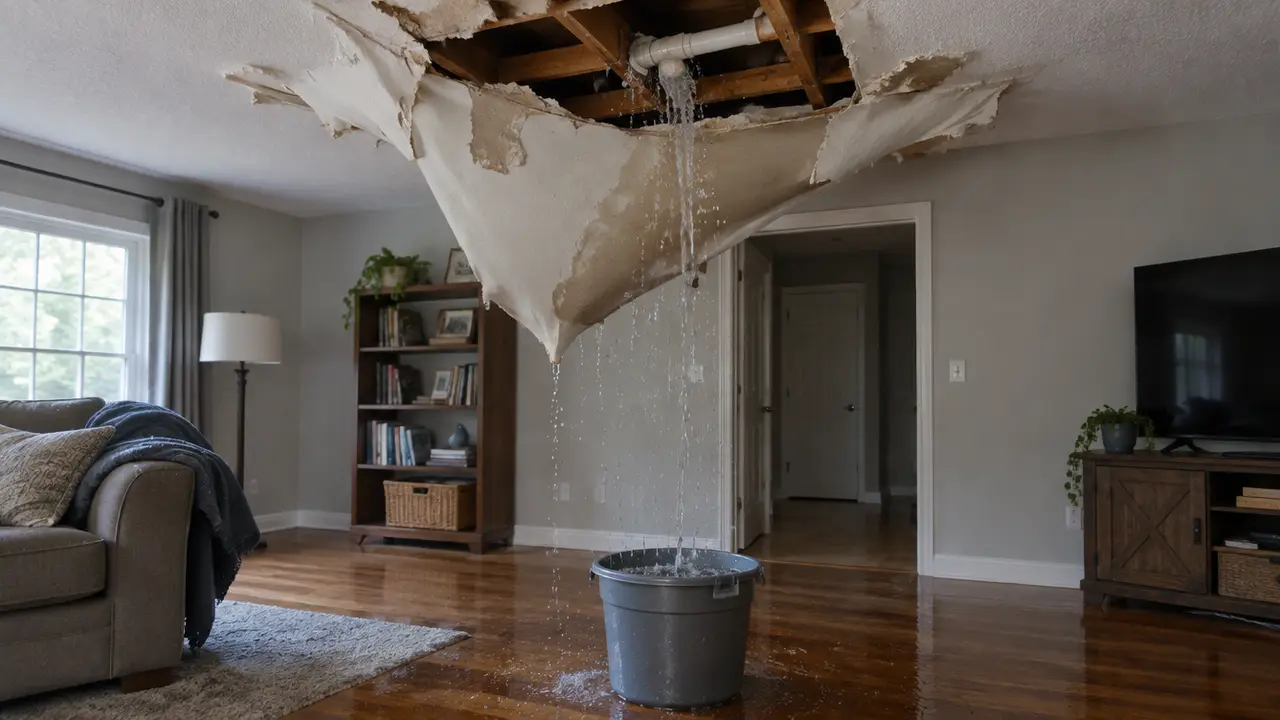
Three hazards come before the cleanup after a burst pipe. Do not enter water that is above outlets, baseboard heaters or the furnace, or near the panel; ask the electric utility to cut power. Keep people out from under a sagging or bulging ceiling. Treat water from toilets, floor drains or sewers as contaminated and protect children and vulnerable people from it.
- Water above outlet height or near the panel means the utility disconnects power, not you.
- Switch a breaker only from a dry floor, with dry hands, at a panel that is itself dry.
- A ceiling holding water can fail suddenly; keep people clear and let it be drained from the side.
- Any electrical device or wiring that has been under water should be checked by a licensed electrician before use.
- Sewage-contaminated water changes the whole cleanup: protective gear, discard porous materials and keep vulnerable people away.
01 /When is it unsafe to walk into a flooded room?
It is unsafe when the water could be energised. The Electrical Safety Authority in Ontario advises against entering a basement if the water is above the level of electrical outlets, baseboard heaters or the furnace, or is near the electrical panel, and says to call the local electric utility to disconnect power to the home. The same logic applies to any room and any province.
Electric utilities generally keep a 24-hour emergency line for exactly this. They can pull the meter or disconnect service from outside, which makes the house safe without anyone touching wet equipment. Wait outside the wet area until they confirm the power is off.
02 /When can you switch off a breaker yourself?
Only when the panel is dry, the floor you are standing on is dry, and your hands are dry. If all three are true and water is spreading toward outlets, switching off the breakers for the affected rooms, or the main breaker, is a sensible precaution. Health Canada's flood cleanup advice includes shutting off power to the flooded area at the breaker box, wearing rubber boots while standing in water and keeping extension cords out of it.
| Situation | Who acts | Why |
|---|---|---|
| Panel and floor dry, water in another room below outlet height | You, at the breaker | No contact with wet equipment is needed |
| Panel dry, but you would have to wade to reach it | Electric utility | Standing in water at a live panel is the classic shock scenario |
| Water above outlets or near heaters or the furnace | Electric utility | The water itself may be energised |
| Water dripping from a light fixture | Switch that circuit off from a dry panel, or call the utility | The fixture box is now wet inside the ceiling |
| Panel wet, sparking or smelling of burning | Electric utility, then a licensed electrician | The panel may be damaged and unsafe to touch |
Touch nothing metal while you work, and never check whether something is live by touching it. If you are unsure which breaker feeds a wet area, turn off the main and use flashlights until an electrician has looked.
03 /What happens to wiring and appliances that got wet?
They need an inspection before they are used again. ESA's advice after flooding is not to attempt repairs yourself and not to use electrical devices that have been in contact with floodwater, and to have a licensed electrical contractor assess the system. Water leaves corrosion and residue inside outlets, breakers and appliance controls that may not show for weeks.
- Outlets, switches and junction boxes that were submerged are usually replaced, not dried and reused.
- Baseboard heaters and furnaces that sat in water need an assessment by the right trade before they are switched on.
- Pot lights under a wet ceiling should stay off until the ceiling cavity is dry and the fixtures have been checked.
- Portable appliances, power bars and extension cords that were in the water are usually discarded.
- A sump pump that was submerged while plugged in should be checked along with its outlet and circuit.
In Ontario, ESA notes that a licensed electrical contractor files a notification and can provide a certificate of acceptance, which helps with reconnection and insurance. Other provinces handle electrical permits and inspections through their own safety authority or municipality; ask the electrician what applies where you live. Keep the invoice for the claim.
04 /What should you do if the ceiling is sagging?
Get everyone out from underneath it and turn off the lights in that room from the panel. Drywall and plaster ceilings are heavy when dry; saturated, they hold water like a bag and can let go all at once, bringing wet insulation and debris with them.
- Clear the room below
Move people and pets out and keep them out. Do not stand under the bulge to look at it.
- Cut power to that area
Switch off the circuit for the room's lights from a dry panel, or have the utility disconnect service if the panel is not safe.
- Stop the water above
Close the main shut-off. The ceiling will keep holding what is already there.
- Let a professional drain it
A plumber or restorer can relieve the water from the edge of the bulge into a bucket while standing to the side, then remove the saturated section.
- Protect the floor below
Put a tarp and buckets down from the side, without reaching under the bulge.
Once the water is out, the wet section of ceiling and any insulation above it usually come out too. Burst pipe in a wall or ceiling covers opening and drying ceiling cavities.
05 /When is burst pipe water contaminated?
When it has come from, or mixed with, a toilet, a floor drain, a sewer backup or anything else carrying waste. Water from a supply pipe starts clean, but it does not stay clean if it flows through a crawlspace, across soil or into a drain that backs up. Health Canada advises contacting your local public health department where sewage is involved, and says children, pregnant women and people with respiratory problems should never handle sewage-contaminated water and materials.
| Source | Usual treatment | What changes |
|---|---|---|
| Burst supply pipe, caught quickly | Clean water | Standard drying; porous materials may be saved if dried fast |
| Supply water that sat for days or ran through dirty areas | Treat as grey | More removal, cleaning and protective gear |
| Dishwasher or washer discharge | Grey water | Clean and disinfect surfaces, discard more porous material |
| Toilet overflow with waste, floor drain or sewer backup | Black (sewage) water | Protective gear, porous materials discarded, professional cleanup advised |
The full rules, including what to discard, are in clean, grey and black water.
06 /What protective gear do you need for burst pipe cleanup?
Rubber boots and gloves at minimum, with an N95 respirator and goggles for removing wet drywall and insulation. Health Canada's flood cleanup guidance lists disposable gloves, an N95 mask and goggles, and CMHC names electric shock and sewage contamination as the two immediate dangers of flood cleanup.
- Rubber boots keep you insulated from the floor and your feet out of the water.
- Gloves: nitrile for clean-water work, heavier rubber gloves for grey or sewage water.
- N95 respirator when cutting drywall, pulling insulation or handling anything mouldy.
- Eye protection for overhead work and for removing ceiling material.
- Long sleeves and washable clothes, laundered separately afterward.
07 /What other hazards follow a burst pipe?
Slips, carbon monoxide from fuel-burning equipment used indoors, and structural weakness in soaked floors. Health Canada warns against using combustion equipment designed for outdoor use indoors and advises having a working carbon monoxide detector. That rules out running a generator or gas-powered pump inside the house or garage.
- Wet vinyl, tile and painted concrete are slippery; wear boots with grip and put down dry mats at doorways.
- Heavy furniture and appliances can shift on a floor whose subfloor is saturated; move them only with help.
- Gas appliances whose burners or controls were in the water need a gas fitter's check before relighting.
- Hot water from a burst hot line can scald; let it cool or wait until the heater is off and the line has drained.
Once the hazards are managed, the next steps are in what to do when a pipe bursts. If the break was on the hot side near the water heater, check the relief valve discharge pipe too, since a T&P valve that opened can look like a burst.
FAQQuestions people ask
Is it safe to walk in water from a burst pipe?
Not if the water could be touching anything electrical. If it is above outlets, baseboard heaters or the furnace, or near the panel, stay out and ask your electric utility to disconnect power first.
Who do I call to turn off power to a flooded basement?
Your local electric utility. Utilities generally keep a 24-hour emergency line and can disconnect service at the meter so you never touch wet equipment.
Can I use electrical outlets that got wet from a burst pipe?
Not until a licensed electrician has checked them. Outlets and boxes that were under water are usually replaced.
Can a ceiling collapse from a burst pipe?
Yes. A saturated drywall or plaster ceiling can let go suddenly. Keep people out from under any sag or bulge and have it drained from the side.
Is water from a burst pipe dirty?
Supply water starts clean, but it becomes contaminated if it mixes with waste, runs through soil or a crawlspace, or sits for days. Water from toilets, floor drains and sewer backups is treated as sewage.