These are direct answers to the questions people ask most after a water pipe bursts in a Canadian home: what to do first, where the shut-off is, when water and electricity make a room unsafe, how fast to dry out, how each pipe material is repaired, what it costs, how home insurance treats sudden and freezing losses, and who pays in rentals and condos.
- Check for electrical, ceiling and sewage hazards, then close the main shut-off.
- Start drying the same day; Health Canada ties a lower mould risk to drying within 48 hours.
- Sudden escapes of water are commonly covered; gradual leaks and freezing in an unheated, unchecked home commonly are not.
01 /How to use these answers
Each answer below stands on its own and links to the page that explains it in full. If water is running right now, stop reading and go to the main shut-off guide or the first-hour checklist. If you are past the emergency and planning the repair, the Burst Pipe Repair Matcher and burst pipe repair cost are the next stops.
BurstPipe.ca is an independent information and service-request site within HAUSE Home. It is not a plumber, restoration company or insurer, and nothing here is legal or insurance advice. Policy wording, provincial law and your municipality's rules decide the specifics, so confirm anything important with your insurer, your broker or the relevant authority. Cost figures are CAD planning estimates for 2026, not quotes.
FAQAll questions
What are the first three things to do when a water pipe bursts at home?
Check for hazards (water near electrical equipment, a sagging ceiling, sewage), close the main shut-off, and open the lowest tap to drain the lines. Then photograph, protect belongings and call a plumber and your insurer. See what to do when a pipe bursts.
How can I find my main water shut-off quickly?
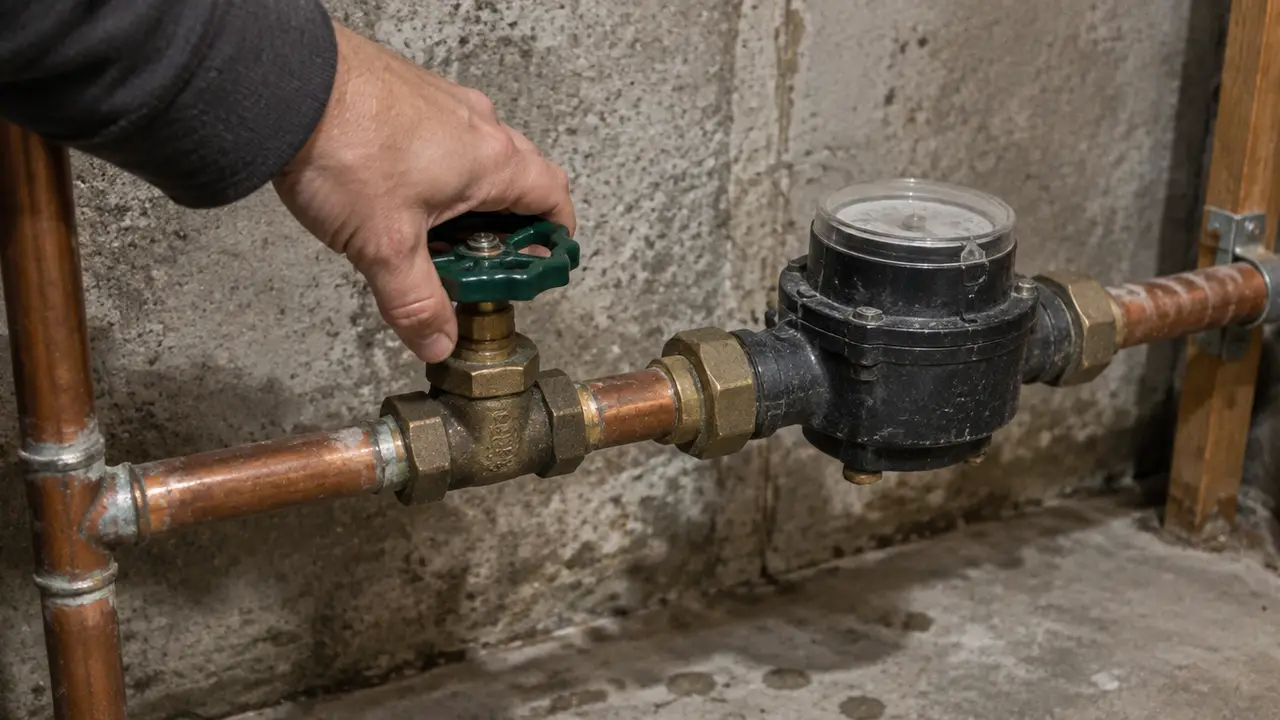
Look where the water service enters the house, usually in the basement or utility room near the floor and often beside the meter. Follow the cold line back from the water heater if you cannot see it. See the main shut-off guide.
What if my main water valve is stuck?
Do not force it with an extension bar. Close fixture stops near the break, open low taps, collect water, and call your municipality to operate the outdoor service valve and a plumber to replace the main valve.
When is it too dangerous to go into a flooded room?
When water is above outlets, baseboard heaters or the furnace, or near the panel. Stay out and ask your electric utility to disconnect power. See burst pipe safety.
What should I do about a ceiling that is bulging with water?
Get everyone out from underneath, switch off that room's lights from a dry panel, close the main and have it drained from the side by a professional.
How much water leaks from a split pipe in 15 minutes?
At a 45 L a minute supply limit, about 675 litres. A 1 mm pinhole at 60 psi releases about 13 litres in the same time. Try the Burst Pipe Water Loss Timer.
How do I tell if a pipe has burst inside a wall?
Listen for running water with everything off, and watch the meter's low-flow indicator. Stains, bubbling paint and a bowing ceiling follow. See burst pipe in a wall or ceiling.
What is the deadline for drying after water damage?
Treat 48 hours as the working deadline. Health Canada says a house and furnishings are less likely to grow mould if they are dried within that time. See the drying guide.
Which wet materials usually have to be removed after a burst?
Carpet pad, wet insulation and drywall that stayed wet, cut above the wet line. CMHC advises removing wet drywall at least 30 cm above the flood water level after flooding.
How do I know if burst pipe water is contaminated?
Supply water starts clean, but it becomes grey or black if it mixes with drain water or sewage, runs through soil, or sits for days. See clean, grey and black water.
Is it safe to clean up mould myself after a leak?
Small areas, yes, with an N95 respirator, gloves and eye protection. Health Canada recommends professional help for mould areas larger than 3 m².
Which temporary repairs hold on a burst pipe?
A bolted repair clamp over the damage, or a push-fit coupling rated for the pipe after the damaged length is cut out. Tape and putty suit pinholes only. See temporary burst pipe fixes.
How is a burst copper, PEX or CPVC pipe repaired properly?
The damaged length is cut out and new pipe of the same material joined with rated fittings: soldered, pressed or push-fit on copper; the house's crimp, clamp or expansion system on PEX; solvent-welded CPVC. See repair by pipe material.
Should galvanized or poly-B pipe be replaced after it bursts?
It is usually the time to price a repipe. Galvanized steel corrodes from the inside, and many insurers and buyers treat poly-B as a known risk. Ask your insurer how the pipe type affects your policy.
What does a plumber typically charge for an emergency burst pipe repair?
As a 2026 planning estimate, an exposed break often plans at $350 to $900 including the call-out. Breaks in finished walls, under slabs or in the yard cost more. See burst pipe repair cost.
Why can drying cost more than the pipe repair?
Drying involves extraction, removal of wet materials and days of monitored equipment, and rebuild follows. A one-room clean-water drying job commonly plans at $1,500 to $4,000.
Do I need both a plumber and a restoration company?
Usually, if walls, ceilings or floor coverings got wet. The plumber fixes the pipe; the restorer dries the structure. See plumber or water damage restoration company?.
Will my home insurance pay for water damage from a burst pipe?
Often, if the escape of water was sudden and accidental, less the deductible. Gradual leaks are commonly excluded. See does home insurance cover burst pipes?.
What are the insurance rules about frozen pipes when I am away in winter?
IBC describes a common condition: if you are away more than four days during the heating season, you must drain the plumbing or have the home checked regularly. Read your own policy's terms.
What records should I keep for a burst pipe claim?
Photos and video before cleanup, the failed pipe section, the plumber's written cause, moisture logs, receipts and a contents list. IBC notes a proof of loss is typically due within 30 days. See documenting the claim.
Who pays when a pipe bursts in a rented home?
Usually the landlord repairs the pipe and building, and the tenant's own insurance covers the tenant's belongings and extra living costs. See tenants, landlords and condos.
Can a condo board charge me for a burst pipe in my unit?
Possibly. Where bylaws and provincial law allow, a corporation may charge an owner its deductible for a loss that came from the owner's unit. Check your bylaws and your own policy's deductible coverage.
Who fixes a burst water line under my lawn?
Usually the owner, through a plumber, if the break is on the private side of the property line; the municipality handles its side. In Calgary, call 311 to confirm. See burst pipe under a slab or in the yard.
How can I stop a pipe from bursting again?
Fix the cause: reroute pipes out of cold spots, replace failing material, check pressure and expansion, add leak sensors or an automatic shut-off valve, and close the main when the house is empty. See preventing another burst pipe and, for freeze prevention, BurstPipes.ca.