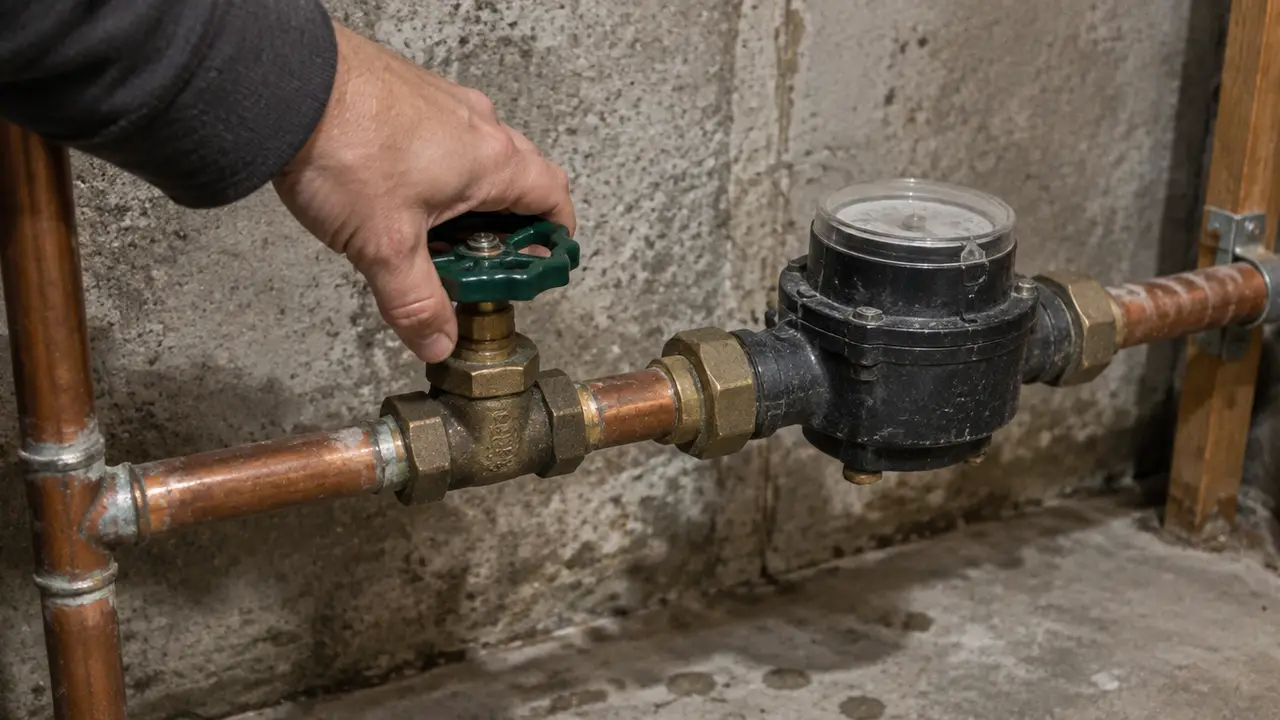
If a pipe bursts in a Calgary home, close the main shut-off, usually in the basement near the floor where the water line enters, and call 311 if the house is flooding, you have no water or water is pooling outside. The City owns the service valve and the line to the property line; the owner pays for the line into the house and repairs on private property.
- Calgary's advice for a flooding house is to turn off the main shut-off valve and contact 311.
- The City owns and operates service valves; lines from the service valve to the building are the owner's responsibility.
- Call 311 for no water, or for water pooling on grass, road or sidewalk; 403-268-2489 reaches 311 from outside Calgary.
- Owners pay for repairs to the service on private property, including frozen or damaged meters.
- Calgary lists repairing a leak as work that needs no plumbing permit, but replacing water lines requires one.
01 /What should you do first if a pipe bursts in a Calgary home?
Make sure the area is safe, then close the main shut-off valve. The City of Calgary's frozen-pipe guidance puts it in two steps for a house or basement that is flooding: turn off the main shut-off valve, then contact 311. Safety comes first: stay out of water that has reached outlets, baseboard heaters, the furnace or the panel, and keep people out from under any sagging ceiling.
- Find the main shut-off
The City describes internal main shut-offs as located where the water line enters the home, usually in the basement near the floor and close to the water tank.
- Close it fully
Clockwise on a round handle; a quarter turn on a lever until it sits across the pipe.
- Call 311 if needed
If the valve will not close, the house is flooding, you have no water, or water is pooling outside.
- Call a plumber and your insurer
The pipe inside your property line is yours to repair; your insurer opens the claim.
- Start drying
Health Canada ties a lower mould risk to drying within 48 hours.
02 /When should you call 311 in Calgary?
Call 311 when the problem involves the City's side of the water system, or you cannot stop the water yourself. The City asks residents to call 311 if they have no water or see water pooling on the grass, road or sidewalk, and to contact 311 when a house or basement is flooding. It also asks residents to call 311 or submit an online request to have City crews investigate service valve problems.
| Situation | Call | Why |
|---|---|---|
| House or basement flooding | Close the main, then 311 | The City's own advice for a flooding home |
| Main shut-off will not close | 311, and a plumber | The City operates the outdoor service valve |
| No water at all | 311 | May be a main break or a City-side problem |
| Water pooling on grass, road or sidewalk | 311 | May be a main or service line break |
| Leak inside the house, water off | A plumber | Private plumbing is the owner's to repair |
| Water near outlets or the panel | Your electric utility | Disconnect power before anyone enters |
311 is available 24 hours a day by phone, the Calgary 311 app and online. From outside Calgary, the number is 403-268-CITY (2489).
03 /Who owns what: the City's side and yours?
The City's water pages set out the split. The City is responsible for the water service line from the water main up to the homeowner's property line. Service valves are owned and operated by The City, and any water lines running from the service valve to the home or building are the owner's responsibility. The City also says that the property owner is responsible for all repair costs to the service on private property, including missing, damaged or frozen water meters.
| Part of the system | Responsibility | What that means after a burst |
|---|---|---|
| Water main in the street | City | Report breaks to 311 |
| Service line from the main to the property line | City | Report leaks and pooling to 311 |
| Service valve | City owns and operates it | Call 311 to have it operated; fees can apply for planned shut-offs |
| Service line from the service valve to the house | Owner | Owner hires a plumber and pays for repairs |
| Main shut-off, meter area and plumbing inside | Owner | Owner protects from freezing and pays for repairs |
The City notes that shutting off water at the outdoor service valve for owner work falls under its Water Interruptions and Disconnections service, with applicable fees. An active flood is different from a planned shut-off, so say so when you call. For breaks you cannot see, the slab and yard guide covers leak detection and excavation.
04 /What happens during a Calgary water main break?
City crews repair the main and restore service, and the City asks residents to flush their taps afterward. It aims to complete repairs in under 48 hours, with simple repairs often taking about a day and complicated breaks taking 72 hours or more. After the water comes back, the City advises running the bathtub tap on cold for 10 minutes until the water clears, then running other cold taps for five minutes or until clear.
- A main break is not the same as a burst in your house, but the two can look alike from inside: no water, then air and discoloured water.
- If you have no water and neighbours do, the problem is more likely on your service or inside your property; call 311 to rule out the City side.
- Keep taps closed during the outage except one, so you notice when water returns and can flush as the City advises.
05 /Why do Calgary cold snaps cause so many bursts?
Because long stretches of deep cold drive frost into the ground and into the colder corners of houses. The City notes that winter frost depths in Calgary typically range from two to three metres, and that pipes are buried around three to four metres deep. Buried depth, water temperature and frost depth are among the factors the City lists for why underground service pipes freeze.
The City says owners are responsible for protecting the water meter, valves and pipes on their property from freezing, and runs a Frozen Pipes Prevention Program that sends letters between December 1 and March 31 to properties it identifies as at risk of frozen service pipes. Those letters ask residents to run one inside tap continuously at about the width of a pencil until a follow-up letter says to stop. How freezing works, and how to prevent it, is covered in depth by the sister site BurstPipes.ca.
06 /Do Calgary burst pipe repairs need a permit?
A simple leak repair usually does not; replacing lines usually does. The City lists repairing a leak in a water distribution or drainage system, replacing existing faucets and fixtures, and removing a drainage blockage as plumbing work that does not require a permit. Replacing water and sewer lines in or around the home extends or alters the system and requires a plumbing permit.
| Work | Permit? |
|---|---|
| Repairing the leak in place | Not required |
| Replacing a faucet or fixture damaged by the leak | Not required |
| Replacing water lines, such as a reroute or repipe | Required |
| Replacing the private water service line | Required |
| Replacing a water heater damaged in the same event | Sometimes; ask 311 before work starts |
Homeowners may apply for plumbing permits themselves; the City says homeowners can apply for all permit types except a gas permit, unless they meet the conditions for journeyman gasfitters. Repair methods by material are in burst pipe repair by material.
07 /What do Calgary renters and condo owners need to know?
Alberta's rules put repairs on the landlord and let a landlord enter without notice in an emergency. The province explains that a landlord is responsible for keeping rental premises reasonably safe and in good repair at all times, may enter without permission or notice when there is reason to believe there is an emergency, and that a tenant cannot withhold rent because they believe the landlord is not meeting obligations.
Condo owners should read their corporation's bylaws on insurance and deductibles and compare their own policy's deductible coverage. The province's condominium information pages link to its fact sheet on recovering insurance deductibles. The full picture is in tenants, landlords and condos.
08 /Digging for a burst service line in Calgary?
Request locates first, and remember that your own line will not be marked. In Alberta, Utility Safety Partners takes locate requests online or at 1-800-242-3447 during business hours, free of charge, and asks for at least three full working days' notice. It notes that customer-owned lines such as private water services are not registered with it and must be marked by a private locator.
With service lines buried around three to four metres deep in Calgary, repairing a private service is excavation work for a plumber with a crew, not a weekend job. Planning ranges are in burst pipe repair cost, and if you would like help finding local trades, you can send a request.
FAQQuestions people ask
Who do I call in Calgary if a pipe bursts?
Close the main shut-off first. Call 311 if the house is flooding, the valve will not close, you have no water or water is pooling outside, and call a plumber for pipes inside your property line.
Does the City of Calgary fix burst water lines on my property?
No. The City says the owner is responsible for repairs to the service on private property. The City handles the main and the service line up to the property line.
Can I turn off the City water valve outside my Calgary house?
The City owns and operates service valves. Call 311 to have it operated; fees can apply for planned shut-offs.
Do I need a permit to fix a burst pipe in Calgary?
The City lists repairing a leak as work that does not need a plumbing permit. Replacing water lines, such as a reroute or repipe, requires one.
How deep are water lines in Calgary?
The City says pipes are buried around three to four metres deep, with winter frost typically reaching two to three metres.
What is the 311 number from outside Calgary?
403-268-CITY (2489). 311 is available 24 hours a day by phone, app and online.