Water from a burst supply pipe starts clean, but it becomes grey if it sits for days, runs through dirty areas or mixes with appliance discharge, and black if it contains sewage from a toilet, floor drain or sewer backup. The dirtier the water, the more porous material must be thrown out, the more protective gear is needed, and the stronger the case for professional cleanup.
- The category depends on where the water came from and what it touched, not on how it looks.
- Clean supply water degrades with time and contact; treat water that sat for days as grey.
- Porous materials soaked by sewage-contaminated water are discarded rather than cleaned.
- Health Canada says children, pregnant women and people with respiratory problems should never handle sewage-contaminated water and materials.
- Tell your insurer the source; sewer backup is usually a separate, optional coverage from a burst pipe.
01 /What are clean, grey and black water?
They are the three categories the water damage restoration trade uses to describe how contaminated escaped water is. The ANSI/IICRC S500 standard for professional water damage restoration, which sets out procedures and precautions for that work, is the usual reference; restorers often say Category 1, 2 and 3 for clean, grey and black. The labels matter because they decide what can be saved.
| Category | Typical sources in a home | What it means for cleanup |
|---|---|---|
| Clean (Category 1) | A burst supply pipe, a failed supply hose, a water heater tank, clean melt water from a frozen line | Porous materials can often be dried and kept if drying starts quickly |
| Grey (Category 2) | Dishwasher or washing machine discharge, a toilet overflow with urine but no feces, clean water that has sat or travelled through dirt | More cleaning and removal; some porous items discarded |
| Black (Category 3) | Sewer backup, toilet overflow with feces, floor drain backflow, water that ran through soil or a crawlspace and sat | Porous materials discarded, protective gear, professional cleanup advised |
Nothing about the colour of the water settles the question. Clean water from a rusty galvanized line can look brown, and grey water can look clear. Ask where it came from, what it touched and how long it has been sitting.
02 /How does clean water from a burst pipe become grey?
Through time, contact and temperature. Supply water leaves the pipe drinkable, but once it soaks into carpet, runs across a dusty basement floor, picks up soil, or sits warm for a couple of days, bacteria and debris multiply. Restoration crews treat a clean-water loss that has been left for days as a grey-water loss for that reason.
- Water that ran under a subfloor or into a crawlspace and pooled on soil.
- Water that reached a floor drain that then backed up.
- Water that has been standing more than a day or two in a warm house.
- Water that soaked through contaminated materials, such as pet areas or stored garbage.
- Water that mixed with a leak from a drain line in the same wall or ceiling.
That is one more reason the first hours matter. The first-hour checklist and the drying guide are built around getting water out before it changes category.
03 /What makes water black, and why does it matter so much?
Sewage, or anything that has mixed with it. A burst pipe produces black water when it happens alongside a drain problem: a drain line cracked in the same freeze, a floor drain that backs up because a basement is flooding, or a toilet that overflows because its supply valve failed. It matters because sewage carries bacteria, viruses and parasites that cannot be reliably cleaned out of porous materials.
CMHC identifies electric shock and sewage contamination as the two immediate dangers of flood cleanup, and advises keeping vulnerable people away from contaminated water and materials. If the electrical hazard is also present, the electrical safety guide comes first.
04 /What must be thrown out after grey or black water?
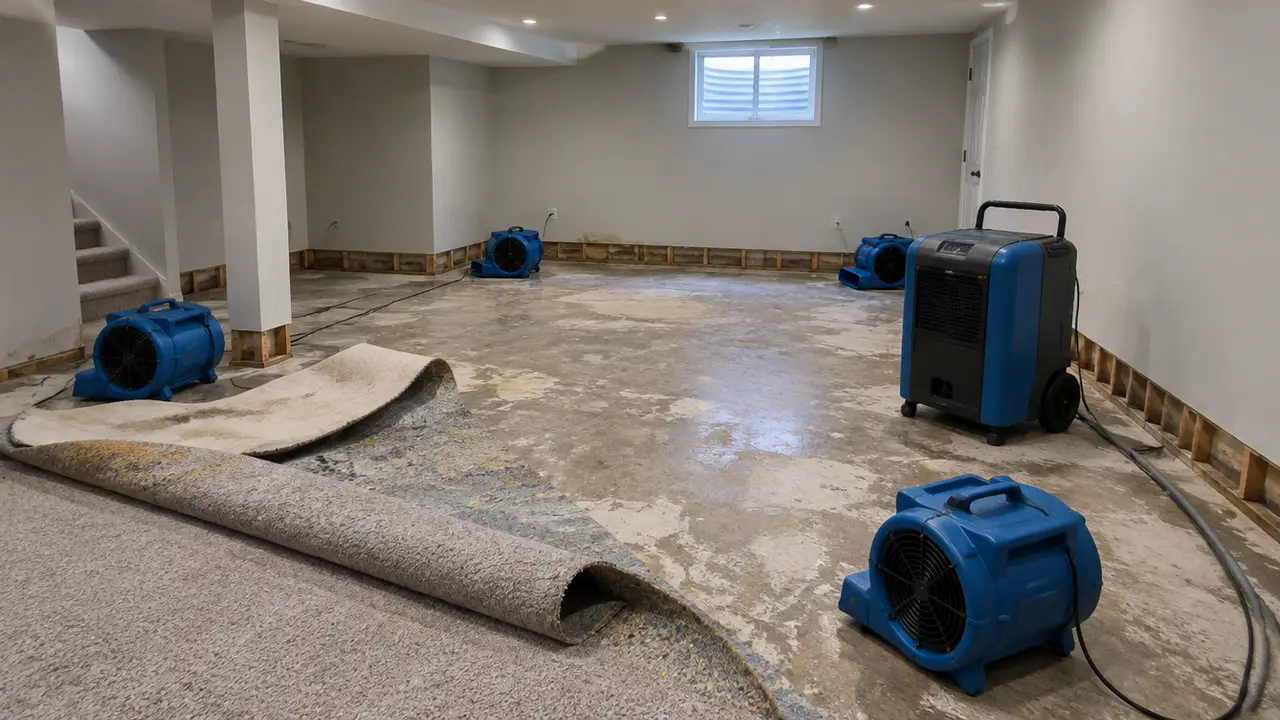
More than after clean water, and for black water, almost everything porous that it touched. The line between clean and discard moves with the category.
| Material | Clean water | Grey water | Black water |
|---|---|---|---|
| Carpet | Often dried and kept if lifted quickly | Often discarded | Discarded |
| Carpet pad | Usually discarded | Discarded | Discarded |
| Drywall | Kept if dried fast; else cut above the wet line | Cut above the wet line | Cut well above the wet line |
| Insulation | Discarded if soaked | Discarded | Discarded |
| Solid wood framing | Dried | Cleaned and dried | Cleaned, disinfected and dried |
| Upholstered furniture, mattresses | Sometimes saved | Usually discarded | Discarded |
| Hard goods: metal, glass, sealed plastic | Wiped and dried | Washed and disinfected | Washed and disinfected |
| Food, medicines, cosmetics touched by water | Check packaging | Discard | Discard |
Photograph and list everything before it leaves the house. The Insurance Bureau of Canada advises keeping damaged items unless they are dangerous or a health hazard, and sewage-soaked materials fall in the second group, so photograph them, note them, and ask your adjuster how to handle disposal.
05 /Can you clean up grey or black water yourself?
A small grey-water spill on hard floors, yes, with care. Sewage in living space, or any grey water that soaked carpet, drywall or insulation, is usually a job for a water damage restoration company with the gear to contain and clean it.
Health Canada's flood guidance recommends cleaning with detergent and says bleach is not necessary to clean up mould. For sewage, restorers use cleaning and disinfection products suited to the surface; follow the label and never mix cleaning chemicals.
06 /How does the water category affect insurance?
It can decide which coverage applies. A burst supply pipe is an escape of water from plumbing; sewer backup is a separate peril that IBC describes as available as an optional add-on to a policy. If a burst causes a drain to back up, or both happen in the same event, tell the insurer exactly what you saw so the claim is assessed under the right parts of the policy.
- Describe the source precisely: which pipe broke, where water came out, and whether any drain backed up.
- Photograph floor drains, toilets and cleanouts as well as the burst pipe.
- Ask whether your policy includes sewer backup coverage and what its limit and deductible are.
- Keep the restorer's category assessment and moisture log with the claim file.
The insurance coverage guide explains the sudden, gradual and freezing tests, and documenting the claim lists the records to keep.
07 /Is your tap water safe to use after a burst pipe?
Usually yes once the repair is done, but flush the lines first. Repairs, pressure loss and air in the pipes can stir up sediment and leave water cloudy or discoloured for a while. Run the cold taps until the water runs clear before drinking it or using it for cooking, starting with the lowest tap in the house.
After a municipal main break, the City of Calgary advises running the bathtub tap on cold for 10 minutes until the water clears, then running other cold taps for five minutes or until clear. Follow your own municipality's advice after any work on its side of the system, and follow any drinking water advisory it issues. If discoloured water persists after flushing, or water from the hot side stays cloudy, ask the plumber to check the lines and the water heater.
08 /What does contaminated water cleanup cost compared with clean water?
Considerably more, because more material is removed, more cleaning is done and crews work in protective gear with containment. As a planning estimate, a one-room clean-water drying job that plans at $1,500 to $4,000 can easily run to several times that if the water is sewage and the room is finished.
Line items and ranges are in burst pipe repair cost. When you compare estimates, check that each one uses the same water category; a cheaper quote that treats black water as clean is not a saving.
FAQQuestions people ask
Is water from a burst pipe safe to touch?
Supply water is clean when it leaves the pipe, but watch for electrical hazards first. If it has mixed with drain water, soil or sewage, or has sat for days, wear gloves and boots and treat it as contaminated.
What is Category 3 water damage?
Black water: water containing sewage or similar contaminants, such as a sewer backup or a toilet overflow with feces. Porous materials it soaks are normally discarded.
Can clean water damage turn into grey water?
Yes. Clean water that sits for a day or two, runs through dirty areas, or soaks through contaminated materials is treated as grey.
Do I need to throw out carpet after a sewage backup?
Yes. Carpet and pad soaked by sewage-contaminated water are normally discarded because they cannot be reliably disinfected.
Is sewer backup covered the same as a burst pipe?
Not usually. A burst pipe falls under escape of water, while sewer backup is typically an optional add-on. Check whether your policy includes it.