Canadian home policies commonly cover water damage from the sudden and accidental escape of water from indoor plumbing, less the deductible, especially on comprehensive coverage. Gradual leaks are generally excluded, and freezing damage is treated as preventable: IBC notes that if you are away more than four days in the heating season, you must drain the plumbing or have the home checked regularly. Your wording decides.
- The sudden and accidental escape of water from indoor plumbing is a commonly insured peril; gradual deterioration is not.
- Freezing damage is generally regarded as preventable, so policies attach conditions about heat and absences.
- IBC describes a common condition: away more than four days in the heating season means draining the plumbing or having the home checked regularly.
- The water damage and the pipe repair can be treated differently; ask about each separately.
- Named-perils, broad and comprehensive policies respond differently, so know which one you hold.
01 /Is a burst pipe covered by home insurance in Canada?
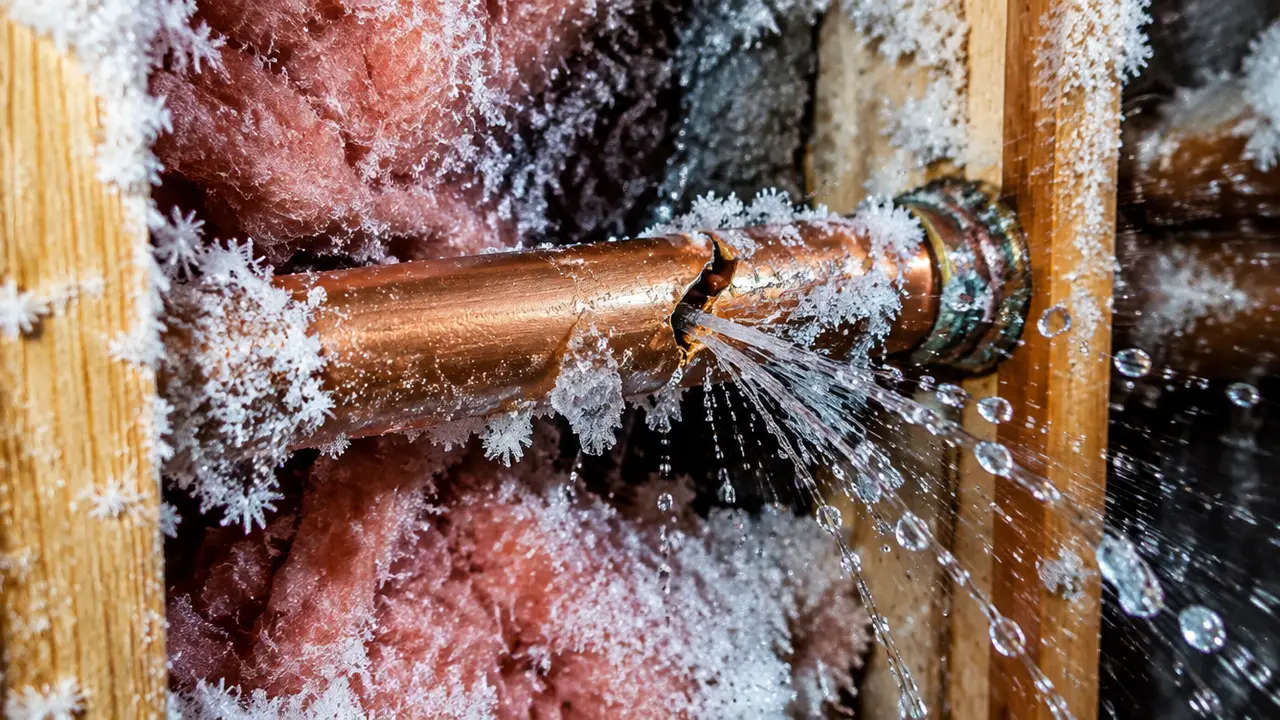
Often, if the water escaped suddenly and by accident, and subject to your deductible and wording. The Insurance Bureau of Canada lists the sudden and accidental escape of water from an indoor plumbing, heating, sprinkler or air conditioning system among the perils a comprehensive policy commonly covers. That describes most bursts: a pipe splits or a fitting blows off and water pours out at once.
Three things commonly narrow that coverage: the loss was gradual rather than sudden, the pipe froze in circumstances the policy treats as preventable, or the water came from somewhere the policy treats as a separate peril, such as a sewer backup or overland flooding. Each is explained below. None of this is legal or insurance advice; the policy wording and your insurer decide.
| Situation | Common treatment | Why |
|---|---|---|
| Supply pipe splits in an occupied, heated home | Often covered, less the deductible | Sudden and accidental escape of water |
| Pinhole that seeped for months behind a wall | Often excluded or limited | Gradual damage treated as maintenance |
| Pipe froze while the home was heated and occupied | Often covered | IBC notes freezing damage despite precautions is typically covered |
| Pipe froze while owners were away without draining or checks | May be excluded | Freezing treated as preventable; absence conditions apply |
| Burst caused a floor drain to back up | Depends on sewer backup coverage | Sewer backup is usually an optional add-on |
| Mould from a leak left running | Often excluded or capped | Linked to gradual or unrepaired leaks |
02 /What is the difference between sudden and gradual water damage?
Sudden damage happens at once and unexpectedly; gradual damage builds over a period during which someone could have noticed and stopped it. IBC explains that gradual deterioration is natural and expected, and therefore not an insured peril. A burst pipe is usually the clearest example of a sudden loss, but a slow leak that eventually gives way can look like both.
- Signs that read as sudden: a single event, fresh water, clean breaks, no staining history, a clear moment of discovery.
- Signs that read as gradual: tide lines on drywall, rust trails, rot in subfloors or framing, established mould, a musty smell, corroded fittings.
- Mixed cases: a pinhole that wetted a cavity for weeks before the pipe split. The split may be sudden; the rot around it may not be.
Describe what you saw and when, accurately. Adjusters read physical evidence, and a timeline that does not fit the evidence causes more trouble than an honest mixed case. Documenting the claim shows how to record it.
03 /Are frozen pipes that burst covered?
Commonly yes if you took reasonable care, and commonly not if the home was left without heat or checks. IBC's description of home coverage treats damage from freezing of indoor plumbing as generally preventable, and notes that if you are away from home for more than four days during the normal heating season, you must drain the plumbing or have the home checked regularly. It adds that freezing damage that happens despite those precautions is typically covered.
| Condition | What to find out |
|---|---|
| Heat maintained | Does the policy require heat to be maintained, and is a turned-down thermostat enough? |
| Absence length | How many days away triggers the condition, and does it apply only in the heating season? |
| Checks | Who may check the home, how often, and should the checks be recorded? |
| Draining | Does shutting off and draining the plumbing satisfy the condition instead? |
| Vacancy | When does the home count as vacant or unoccupied, and what changes then? |
| Seasonal homes | Are cottages and seasonal residences written with different freezing and water terms? |
How pipes freeze, and how to keep them from freezing, is the subject of the sister site BurstPipes.ca. For the claim, what matters is being able to show the heat was on, the checks happened, or the system was drained.
04 /Does insurance pay to fix the pipe itself?
Not always. Policies generally respond to the damage the water caused, and many also pay to open and restore the walls or floors needed to reach the break. The repair or replacement of the failed pipe itself is treated differently from policy to policy, and a pipe that failed through wear or corrosion is often the owner's cost.
Ask your broker three separate questions: is the water damage covered, is the cost of opening and restoring the building to reach the pipe covered, and is the pipe repair itself covered? Asking them one by one avoids the common surprise of a paid claim that leaves the plumbing invoice with you.
05 /How do deductibles and coverage types affect a burst pipe claim?
The deductible comes off every claim, and your coverage type decides whether water escape is covered at all. IBC describes three levels: comprehensive, which covers all risks except those specifically excluded; broad, which covers major items such as the building on an all-risks basis and contents on a named-perils basis; and basic or named perils, which covers only the perils specifically listed.
| Coverage type | How it works | What to check |
|---|---|---|
| Comprehensive | All risks except specific exclusions | The water damage clause and its exclusions |
| Broad | All risks on the building, named perils on contents | Whether escape of water is a named peril for your contents |
| Basic or named perils | Only listed perils | Whether escape of water from plumbing is listed at all |
Some policies carry a separate or higher deductible for water damage. For a small loss, compare the repair estimate with the deductible and ask your broker how a claim might affect renewal before you file. Keep drying regardless, because a small loss left wet grows into the kind insurers exclude.
06 /What does your policy expect you to do after a burst?
Act to limit further damage, report promptly, and keep evidence. IBC's claims guidance says your policy requires you to act to limit any further damage, and advises keeping damaged items unless they are dangerous or a health hazard and keeping receipts for clean-up. It also notes that a proof of loss typically has to be completed and returned within 30 days.
- Stop the water and make it safe
Close the main shut-off, deal with electrical hazards, and start removing water.
- Report the loss
Call your insurer or broker the same day; most insurers run a 24-hour claims line.
- Mitigate reasonably
Extraction and emergency drying are part of limiting damage. Ask whether to book them yourself.
- Keep everything
Photos, receipts, damaged items and samples, and the plumber's report on what failed.
- File the proof of loss on time
Ask for the deadline in writing when the claim is opened.
07 /What if the claim is denied or underpaid?
Ask for the reason in writing, with the policy clause it relies on, and escalate through the insurer's complaint process. Most disputes over burst pipes turn on the sudden-versus-gradual question or on a freezing condition, and both depend on evidence. A plumber's written opinion on what failed and how, dated photos and moisture logs are the materials that move those conversations.
- Ask the adjuster or broker to explain the decision and point to the wording.
- Escalate to a claims supervisor, then the insurer's internal complaint or ombudsperson process.
- Your provincial insurance regulator and independent complaint services are the next steps if the insurer's process does not resolve it.
- IBC notes you may use a contractor of your choice for repairs, which matters if you disagree with an estimate.
Renters, landlords and condo owners have a three-way split of responsibility; see tenants, landlords and condos. The costs you may carry yourself are set out in burst pipe repair cost.
FAQQuestions people ask
Are frozen pipe bursts covered by home insurance in Canada?
Often, if you kept the home heated or met the policy's conditions. IBC treats freezing damage as generally preventable, and policies can exclude it when a home was left without heat, checks or draining during an absence.
Does home insurance cover a burst pipe while on vacation?
It depends on meeting the absence conditions. IBC describes a common rule: away more than four days in the heating season means draining the plumbing or having the home checked regularly. Read your own policy's terms before you go.
Is a slow leak from a pipe covered by insurance?
Gradual leaks are commonly excluded. IBC describes gradual deterioration as natural and expected, and therefore not an insured peril.
Will insurance pay for the plumber to fix a burst pipe?
Sometimes. Policies typically focus on the water damage and access to the break; the pipe repair itself varies by policy. Ask your broker specifically.
Should I claim a small burst pipe?
Compare the estimate with your deductible and ask your broker about the effect on renewal. Keep drying and repairing either way.
Does tenant insurance cover damage from a burst pipe?
Tenant policies commonly cover your own belongings, liability and additional living expenses after a covered loss. The building itself is the landlord's insurance matter.