Stopping a second burst starts with the cause of the first. A freeze split points to a cold location that needs rerouting or protection; pinholes and corrosion point to aging pipe; blown fittings and hoses point to pressure, thermal expansion or poor workmanship. Fix the cause, then add leak sensors or an automatic shut-off valve, and adopt a routine for closing the main when the home is empty.
- Every burst has a cause; ask the plumber to name it in writing before the wall is closed.
- A pipe that froze once in a location will freeze there again unless the location changes.
- High static pressure and unchecked thermal expansion strain fittings, hoses and water heaters; both can be measured.
- Leak sensors warn you; automatic shut-off valves act for you by closing the main.
- Closing the main shut-off when the house is empty is the cheapest protection there is.
01 /Why does the cause of the first burst matter?
Because the same cause will produce the same failure. A plumber who only patches the split has fixed the symptom. Before the wall is closed, ask what failed and why, and get the answer written on the invoice; it is also exactly what an adjuster wants.
| What you saw | Likely cause | What stops a repeat |
|---|---|---|
| Lengthwise split or bulge after a cold night | Freezing in a cold location | Reroute out of the cold spot, or protect it; see BurstPipes.ca |
| Pinhole in copper, green staining | Localised wear or water chemistry | Plumber's assessment of the whole run; replace the section or repipe |
| Leak at threaded joints, rust, low flow | Corroded galvanized steel | Plan a repipe |
| Failed fitting on poly-B | Material and fitting failure | Quotes to repipe; ask your insurer |
| Blown washer or dishwasher supply hose | Aged hose or high pressure | Replace hoses on a schedule, check pressure |
| Fitting pulled apart | Poor installation, pipe movement or pressure spikes | Redo the joint properly; support and secure the pipe |
| Crushed or punctured pipe | Nail, screw or impact | Repair; mark pipe routes before renovating |
The Burst Pipe Repair Matcher adds one of these prompts to every result: look for more splits and fix why it froze, judge the rest of a pinholed line, or redo a failed joint.
02 /If the pipe froze, what has to change?
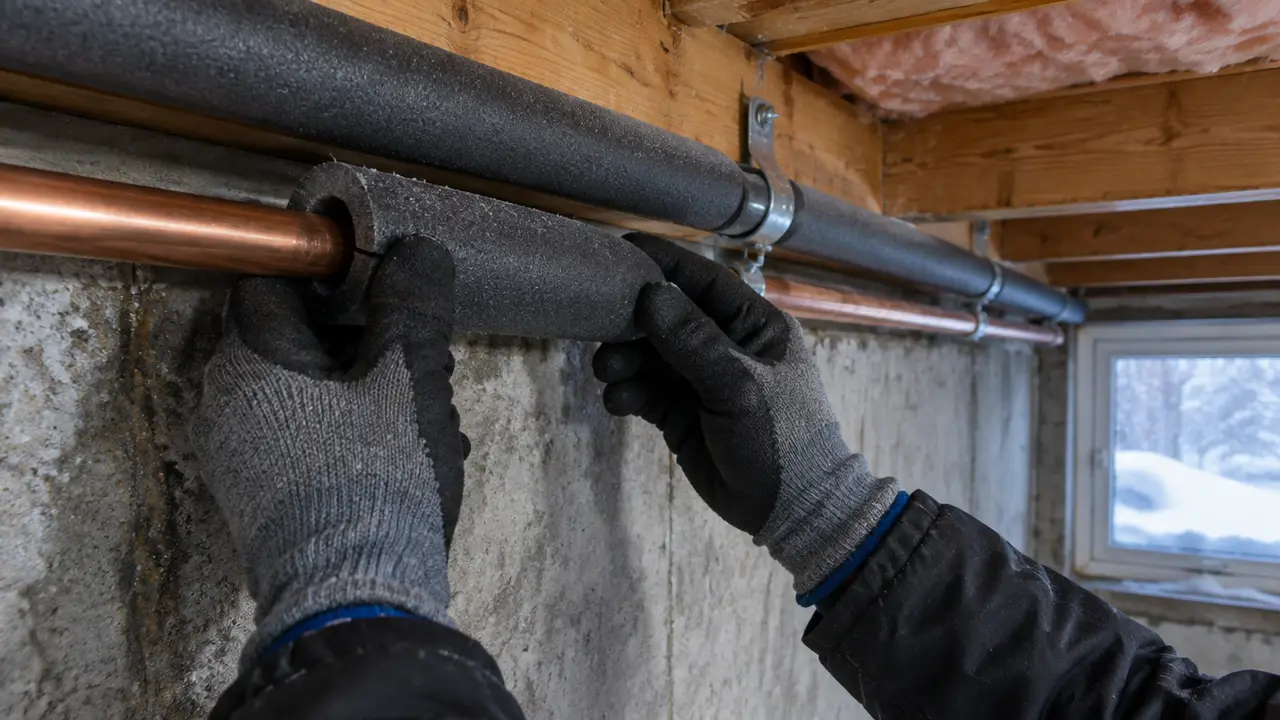
The location, the protection or the heat reaching it. A pipe that froze in an exterior wall, over a garage or in a crawlspace sits in the same cold next winter unless something changes. The repair is the moment when the wall is already open, so it is the cheapest time to reroute the line to an interior wall or add protection.
- Reroute: move the line into a heated interior wall or ceiling while the cavity is open.
- Protect in place: where the line cannot move, the protection options belong to a freeze-prevention plan.
- Seal the cold source: air leaks at rim joists, garage walls and cantilevers are often what froze the pipe.
- Check neighbours of the break: other pipes in the same cavity froze too, even if they did not split.
Freeze prevention, including where pipes freeze and how insulation, heat cable and air sealing work, is covered in depth on the sister site BurstPipes.ca. This page stays with the decisions you make while the repair is open.
03 /Could water pressure or thermal expansion be the cause?
They can contribute, especially when fittings or supply hoses fail rather than pipes. High static pressure keeps constant stress on every joint, and in a closed system, water heated in a tank expands with nowhere to go, raising pressure each time the heater runs. A plumber can measure both with a pressure gauge on a hose bib or laundry tap.
| Check | What it tells you | Typical fix |
|---|---|---|
| Static pressure at a tap | Whether the incoming pressure is high | A pressure-reducing valve, set and checked by a plumber |
| Pressure climb while the heater runs | Whether thermal expansion is uncontrolled | An expansion tank sized for the system |
| Banging when taps close | Water hammer shocking the pipes | Arrestors, securing loose pipes, adjusting pressure |
| Dripping relief valve on the water heater | High pressure or temperature in the tank | Diagnose before replacing the valve |
Your municipality or plumber can tell you what pressure is normal in your area. If a pressure-reducing valve is installed, it needs checking over the years, because a failed one lets full street pressure into the house.
04 /When is it time to repipe instead of repairing?
When the pipe itself is the problem: galvanized steel corroding from the inside, poly-B with a history of fitting failures, or copper with repeated pinholes. Patching those one leak at a time means waiting for the next burst, and each one costs a deductible, drywall and disruption.
Repipe ranges are in burst pipe repair cost. Material-by-material repair patterns are in repair by pipe material.
05 /Do leak sensors and automatic shut-off valves work?
They do different jobs. A leak sensor sits on the floor where water would appear and sounds an alarm or sends a phone alert; it tells you, and you still have to act. An automatic shut-off valve is fitted on the main line and closes it when a sensor detects water or when a flow monitor sees water running abnormally long, so it acts even when no one is home.
| Device | What it does | Limits |
|---|---|---|
| Battery leak alarm | Sounds when water touches its contacts | Only helps if someone hears it |
| Connected leak sensor | Sends an alert to a phone | Depends on power, batteries and the network |
| Automatic shut-off valve with sensors | Closes the main when a sensor gets wet | Only reacts where a sensor is placed |
| Flow-monitoring shut-off valve | Closes the main on unusual flow patterns | Needs set-up; may need tuning to household habits |
| Appliance-level shut-off | Closes the supply to one washer or heater | Protects that appliance only |
Put sensors where a burst would show first: under sinks, beside the water heater, behind the washer, near the main and in the lowest spot of the basement. Some insurers ask whether a home has such devices; ask yours whether any count toward your terms. HAUSE Home does not recommend products or brands.
06 /What routine protects an empty house?
Close the main shut-off when the house will be empty for more than a day or two, keep the heat on in winter, and arrange checks if your policy requires them. The Insurance Bureau of Canada notes that if you are away for more than four days during the heating season, you must drain the plumbing or have your home checked regularly.
- Close the main shut-off and open a low tap briefly to relieve pressure.
- Leave the heat at a steady setting in winter; do not switch it off.
- Turn the water heater to vacation or pilot if the main will be off for a long time, following its manual.
- Ask someone to check the home on the schedule your policy requires, and keep a record of the visits.
- For long winter absences or vacant homes, ask a plumber about shutting off and draining the system.
07 /What small habits prevent the next burst?
- Test the main shut-off once a year so it works when you need it; the main shut-off guide shows how.
- Replace washing machine and dishwasher supply hoses on the schedule in their instructions, and look for bulges or cracking.
- Keep a record of your pipe material and where lines run, especially behind finished walls.
- Before renovating, mark pipe routes so screws and nails stay clear.
- Walk the basement after the first hard cold snap each winter and after long absences.
- Keep a photo inventory of your home up to date; it makes any future claim easier.
If a burst does happen again, the first-hour checklist and the Burst Pipe Water Loss Timer show why the minutes before the valve closes matter most.
FAQQuestions people ask
Why do my water pipes keep bursting?
Repeat bursts usually share a cause: a pipe in a cold location, aging or corroded pipe, high water pressure, uncontrolled thermal expansion or poor joints. Ask a plumber to identify the cause in writing and fix it, not just the leak.
Is an automatic water shut-off valve worth it?
For homes that sit empty, have finished basements or have had a leak, it can limit a burst to minutes of water instead of hours. Compare the installed cost with your water damage deductible and ask your insurer whether it recognises the device.
Should I shut off my main water valve when I go away?
Closing it for absences of more than a day or two limits any leak to what is in the pipes. In winter, keep the heat on and meet your policy's check or draining conditions.
Can high water pressure cause pipes to burst?
It adds stress to every joint, hose and fixture, and is a common factor in fitting and hose failures. A plumber can measure it and fit or adjust a pressure-reducing valve.
Should I move a pipe that froze and burst?
If it runs in an exterior wall, over a garage or in a crawlspace, rerouting it into a heated space while the wall is open is often the most reliable fix.