A pipe just burst. Here is the next move.
BurstPipe.ca is the incident desk for a broken water pipe in a Canadian home: stop the water, keep people safe, limit the damage, fix the pipe the right way for its material, and document the loss so the claim holds up.
BurstPipe.ca is an independent Canadian guide to handling a burst water pipe from the first minute to the final repair. It covers closing the main shut-off, electrical and ceiling hazards, how much water escapes, prompt drying to reduce mould risk, repair methods for copper, PEX, CPVC, galvanized and poly-B, planning costs, and how home insurance treats sudden and freezing losses.
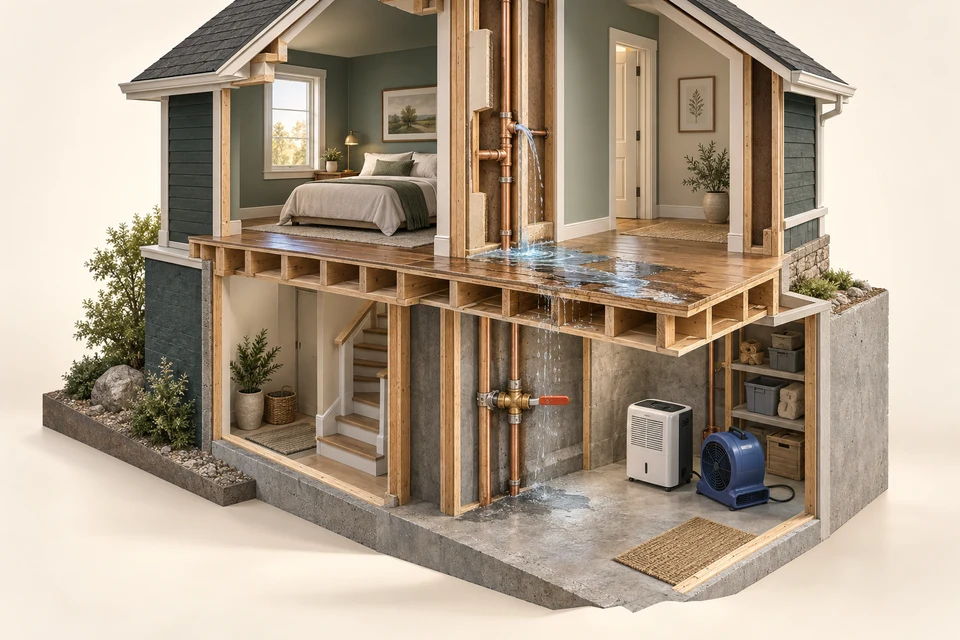
Break a pipe in a model house and race the clock to the main valve
Choose where the supply line fails and how, set the pressure and your house supply, then decide how many minutes pass before someone closes the main shut-off. Run the clock and follow the water from floor to ceiling to basement.
What the model shows, in words
The flow comes from the break or the supply, whichever is smaller
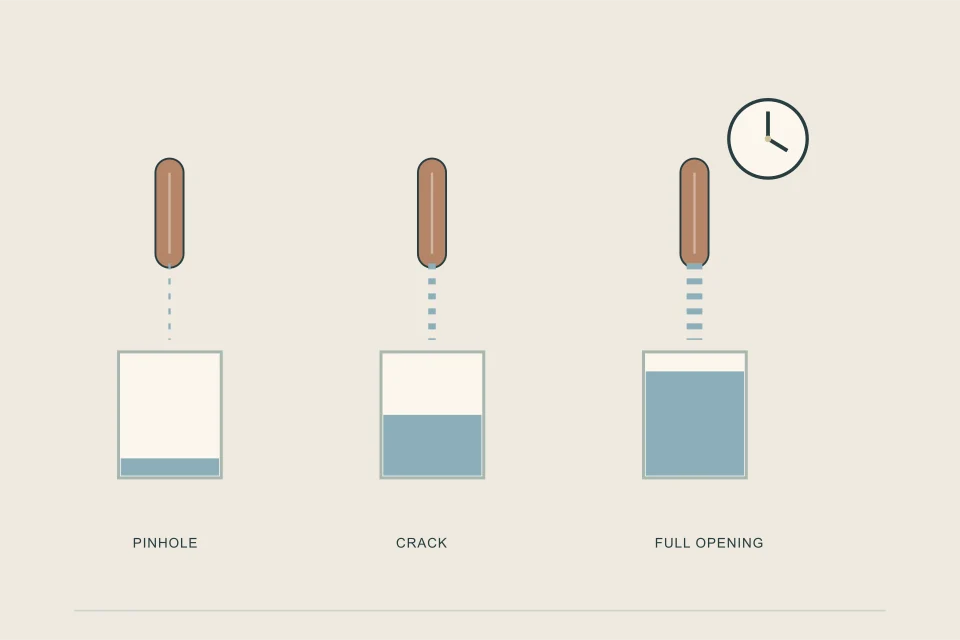
A full-bore split or a blown fitting on a half-inch line could pass far more than a house can deliver, so the service line and meter set the pace. A crack or a pinhole is small enough that the opening itself limits the flow. The model uses the same orifice formula and supply limit as the Water Loss Timer, and the readout under the tubs names the limit in charge.
Minutes are the only control you truly have
Once a pipe has split, the pressure and the size of the opening are fixed. The only thing that changes the final number of litres is how quickly someone closes the main. The panel compares your result with closing it in two minutes, which is the whole argument for learning where the valve is before anything breaks. The shut-off guide shows the usual places to look.
Water keeps travelling after the valve is shut
Water that has already soaked into a subfloor or pooled on top of a ceiling keeps moving down for a while after the supply stops. In the model each layer holds a small amount, then passes part of the excess down after a short delay, so drips can start below even after the clock has stopped. The holding amounts are illustrative, not measured from a real house.
An outside-wall break hides its damage
When the hose-tap line splits inside an exterior wall, the first thing to get wet is the insulation in the cavity, where nobody can see it. The water then runs down the studs toward the basement. That is why a hiss in a wall or a moving meter with every tap off deserves attention; burst pipes in walls and ceilings explains how those breaks are found and opened.
The warnings that outrank the valve
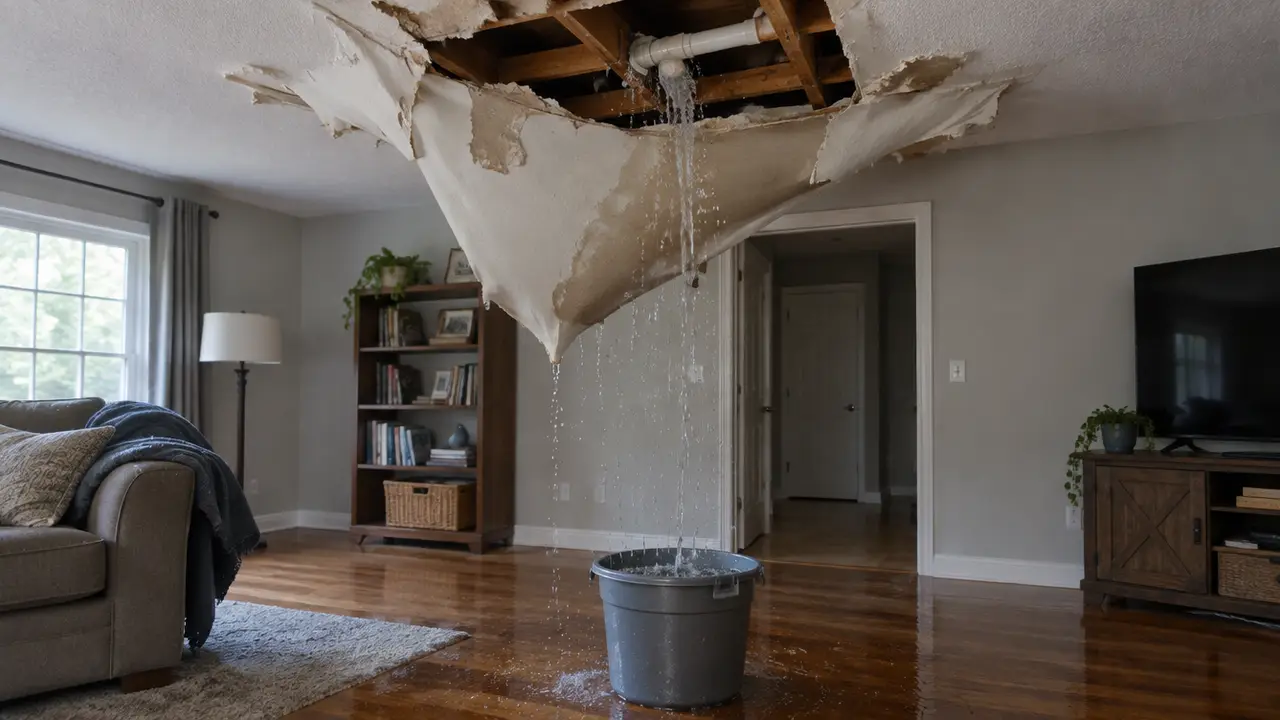
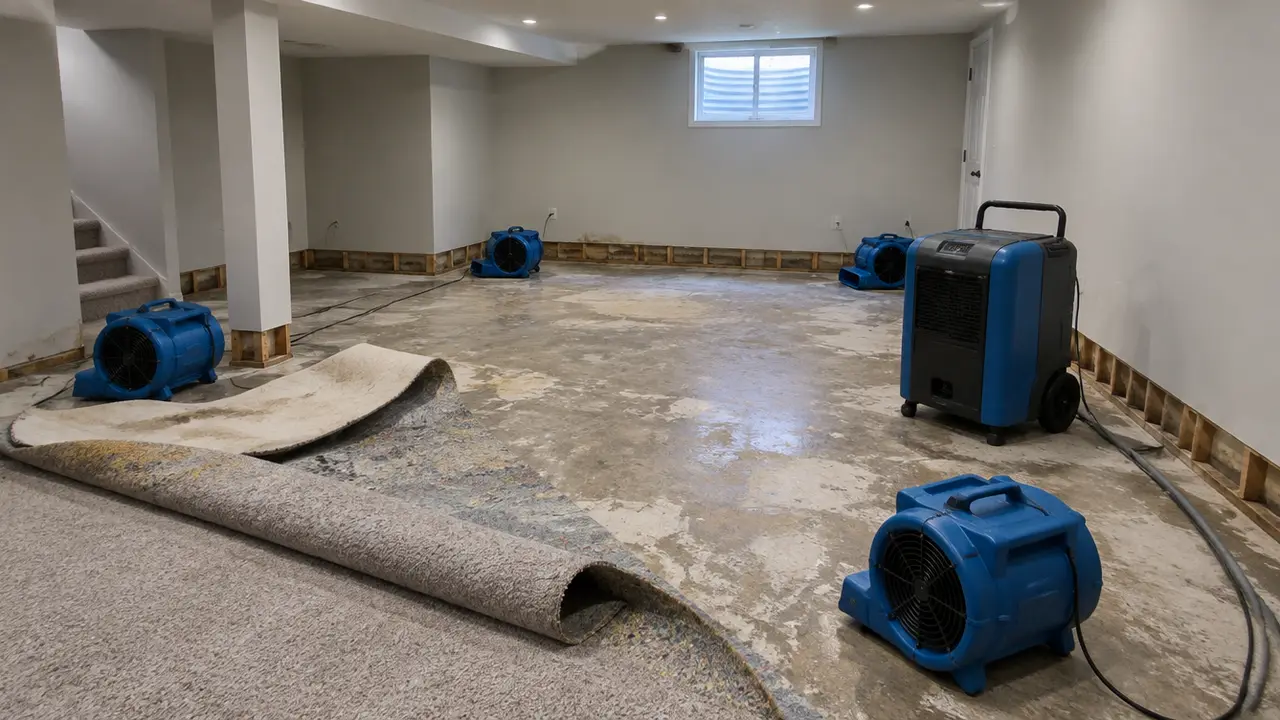
Two moments in the run turn the status red: water reaching the electrical panel or a ceiling light, and a ceiling that bows with trapped water. Both mean staying out of the room and calling for help first. Everything the model shows after the valve closes also starts the drying clock, because wet materials need to be dry within about 48 hours; see drying out after a burst pipe.
What is happening at your place right now?
Pick the closest match. Each path goes to the guide that answers it in full.
Burst Pipe Water Loss Timer
The Burst Pipe Water Loss Timer estimates how fast water leaves a broken supply pipe and how much escapes before the main is closed. Choose the pipe size, the kind of break, your water pressure, your supply limit, the minutes to shut-off and the floor area. It uses an orifice-flow formula capped by the supply limit, and shows litres per minute, the total, litres per hour and depth.
How the Burst Pipe Water Loss Timer works →
Also freeBurst Pipe Repair Matcher
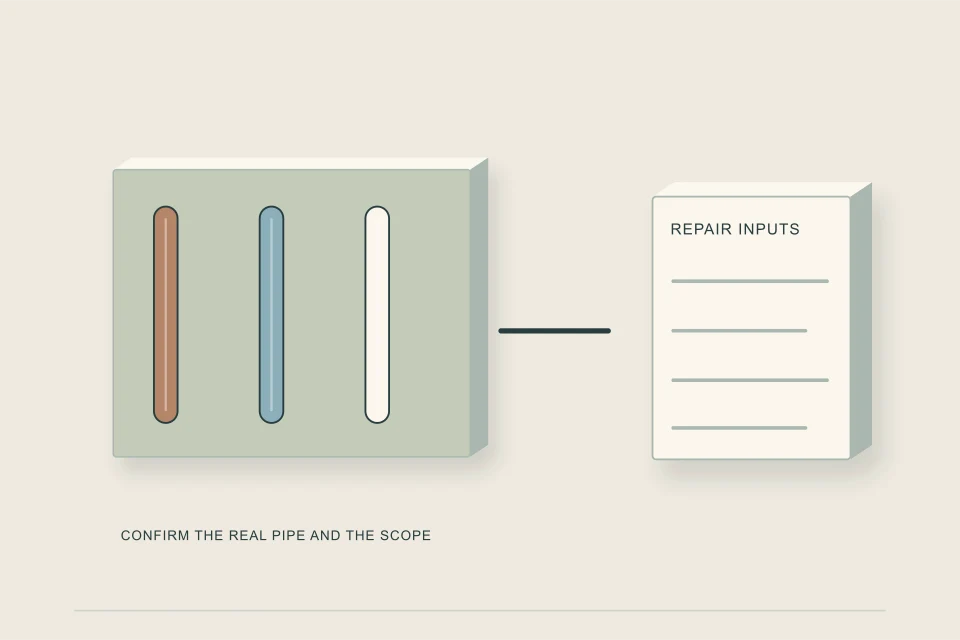
Burst Pipe Repair Matcher: pick the pipe material, damage and location to see the stop-gap, the permanent repair, who should do it and what else to check.
Burst Pipe Water Loss Timer
Read these first
What to do when a pipe bursts
The ordered checklist for the first five minutes, the first hour and the first two days, with the hazards that come before everything else.
CornerstoneBurst Pipe Water Loss Timer
See how many litres a pinhole, a crack or a full split releases at your water pressure while you look for the valve.
CornerstoneBurst pipe repair cost
Planning ranges for the plumbing, the drying, the drywall and flooring, and the larger jobs such as slab leaks and repiping.
CornerstoneMaking the claim hold up
What adjusters ask for after a burst, which photos and records matter, and how to avoid turning a sudden loss into a disputed one.
What it looks like
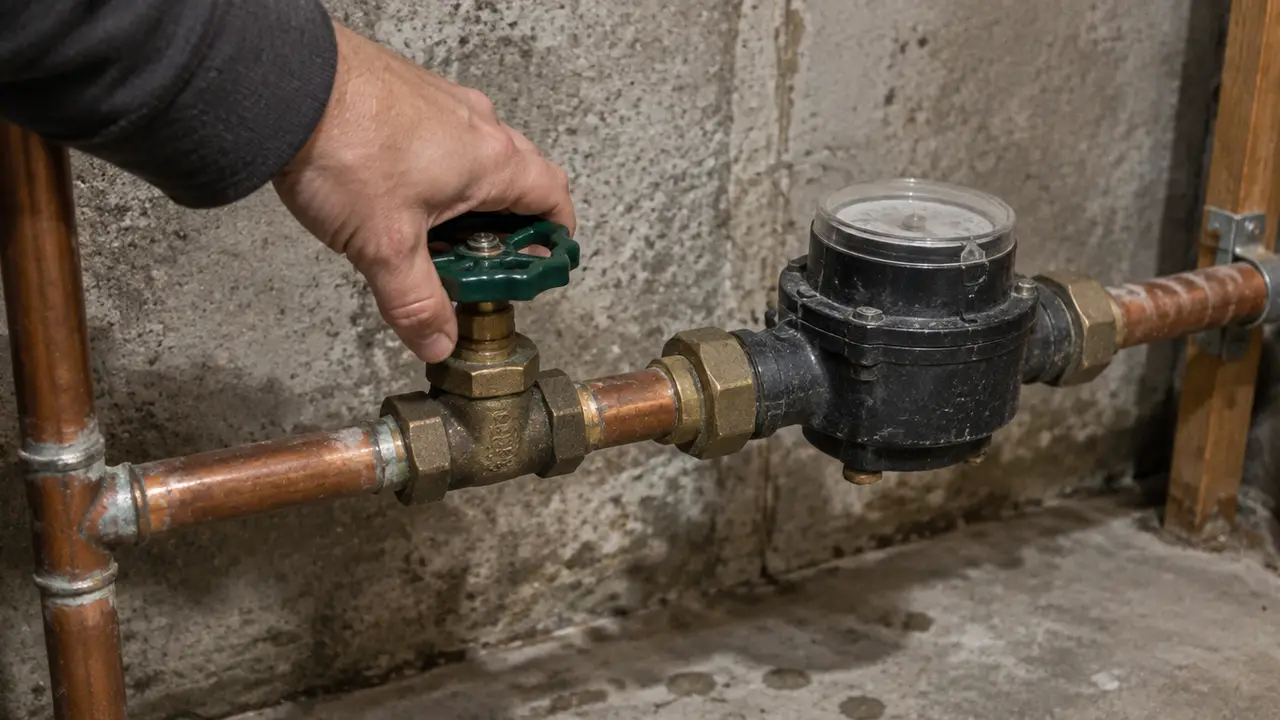
Illustrations of what this work involves and what a camera or a trained eye picks up. Every guide on BurstPipe.ca carries more like these.
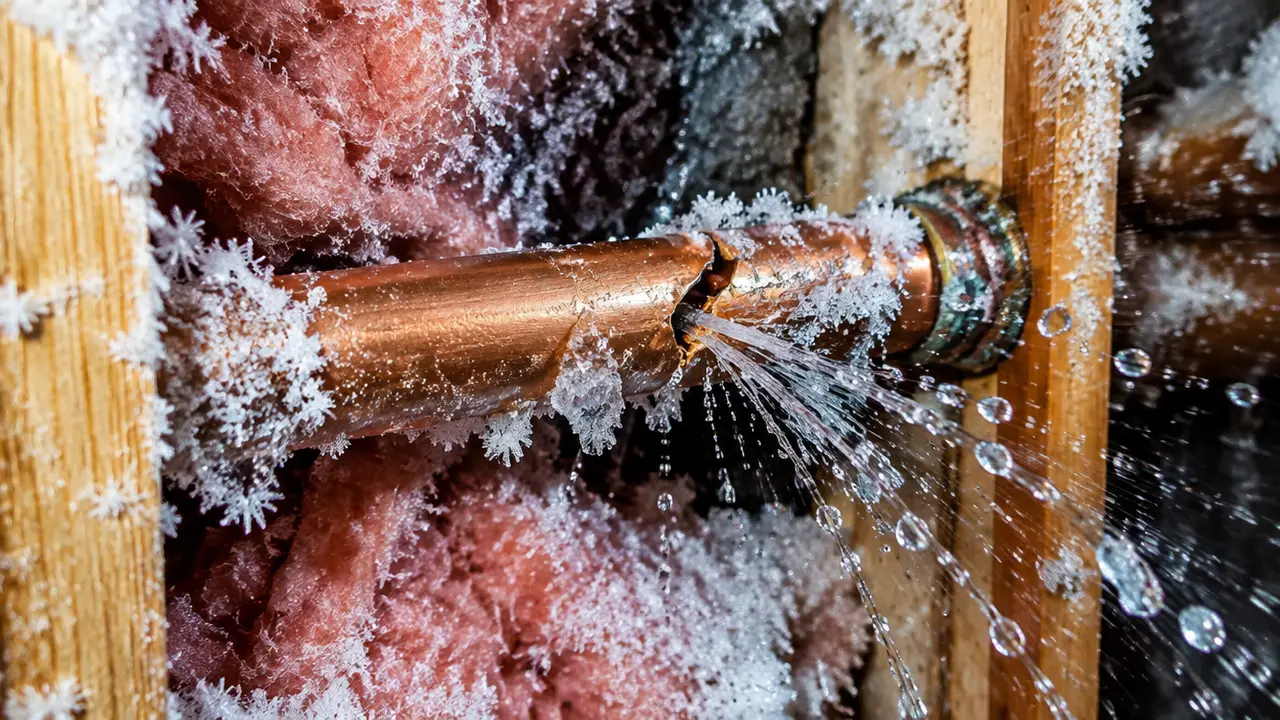
01 /What should you do first when a pipe bursts?
Check for danger, then close the main water shut-off. Those two moves, in that order, decide how the rest of the day goes. Water travelling toward an electrical panel, a ceiling that is bulging with trapped water, or water that has mixed with sewage are reasons to stay out of the area and call for help before you touch a valve. If none of those apply, go straight to the main shut-off, usually in the basement or utility room where the water line enters the house, and turn it fully closed.
- Look before you step
Note where the water is, where it is heading and whether it is near anything electrical or overhead.
- Close the main shut-off
Turn a gate valve clockwise until it stops, or turn a lever quarter-turn valve until the handle sits across the pipe.
- Open the lowest tap
A laundry tub or basement tap lets the water left in the pipes drain out where you choose instead of through the break.
- Photograph, then protect
Take wide shots and close-ups of the break and the damage, then move belongings and start removing water.
- Call the right people
A plumber for the pipe, your insurer or broker for the claim, and a drying company if water has soaked walls, floors or ceilings.
The full sequence, with what to skip and why, is in what to do when a pipe bursts. If you do not yet know where your valve is, the main shut-off guide shows the usual places to look and how to handle a valve that will not turn.
02 /How much damage can a burst pipe do?
More than most people expect, and quickly. A pipe that splits wide open can release water as fast as the home's supply can deliver it, which in many houses is tens of litres a minute. At a supply limit of 45 litres a minute, fifteen minutes of searching for a valve puts about 675 litres on the floor, enough to cover a 12 m² room more than 50 mm deep if it spread evenly. It rarely spreads evenly: it runs under baseboards, into wall cavities and down through the floor below.
A pinhole behaves very differently. At 60 psi a 1 mm hole passes under a litre a minute, which does not flood a room but can soak a wall cavity for days before anyone notices. That slow, hidden wetting is what insurers call gradual damage, and it is often excluded. The Burst Pipe Water Loss Timer runs these numbers for your pipe size, pressure and floor area.
03 /How do you dry out and limit the damage?
Begin safe water removal and drying promptly. EPA recommends drying water-damaged areas and items within 24–48 hours to reduce mould risk. This is a prevention target, not a guaranteed mould-free period or a reason to wait. Materials and hidden moisture need assessment; drying is complete when appropriate checks confirm it. EPA drying guidance.
| Material | Usual outcome | Why |
|---|---|---|
| Solid wood framing | Stays, dried in place | Dries well with air movement and dehumidification |
| Drywall wet at the bottom | Cut above the wet line | Holds water in the paper face and gypsum core |
| Batt insulation in a wet cavity | Removed | Holds water against the framing and slumps |
| Carpet pad | Usually removed | Absorbs like a sponge and dries slowly |
| Laminate and engineered flooring | Often replaced | Core swells and edges cup |
| Anything soaked by sewage-contaminated water | Discarded | Cannot be cleaned reliably |
The drying guide covers the equipment, the moisture readings and the decisions about what to keep. If the water came from a drain or a toilet rather than a supply pipe, read clean, grey and black water first, because the rules change.
04 /How is a burst pipe repaired properly?
By cutting out the damaged section and joining new pipe of the same material with fittings rated for it. Copper is soldered, pressed or joined with push-fit couplings; PEX is joined with the crimp, clamp or expansion fittings the house already uses; CPVC is solvent-welded with CPVC cement. Galvanized steel and polybutylene are repaired with approved fittings, but a burst in either is usually the moment to price a repipe.
A clamp or push-fit coupling on an exposed pipe can get the water back on for a night; it is not the repair. The Burst Pipe Repair Matcher pairs your material, damage and location with a stop-gap, a proper repair and who should do it, and burst pipe repair by material explains each method. Costs are set out in burst pipe repair cost.
05 /Does home insurance cover a burst pipe?
Often, if the escape of water was sudden and accidental, and subject to your deductible and wording. The Insurance Bureau of Canada lists the sudden and accidental escape of water from indoor plumbing among the perils a comprehensive policy commonly covers, while treating gradual deterioration as uninsurable and freezing damage as generally preventable. That last point matters in winter: IBC notes that if you are away for more than four days in the heating season, you must drain the plumbing or have the home checked regularly.
Two pages carry the insurance side here. Does home insurance cover burst pipes? walks through the sudden, gradual and freezing tests, and documenting the claim lists the records an adjuster will ask for. Renters, landlords and condo owners have a split of responsibilities of their own, covered in tenants, landlords and condos.
BurstPipe.ca is part of HAUSE Home, an independent information and service-request network. It is not a plumber, a restoration company or an insurer, and it does not name or rank any of them. Why pipes freeze and how to stop them freezing is covered in depth by the sister site BurstPipes.ca. If you would like help finding someone to repair or dry out a burst, you can send a request. Short answers to common questions are in the burst pipe FAQ, and the trade and insurance words used across the site are defined in the glossary.
Every guide on BurstPipe.ca
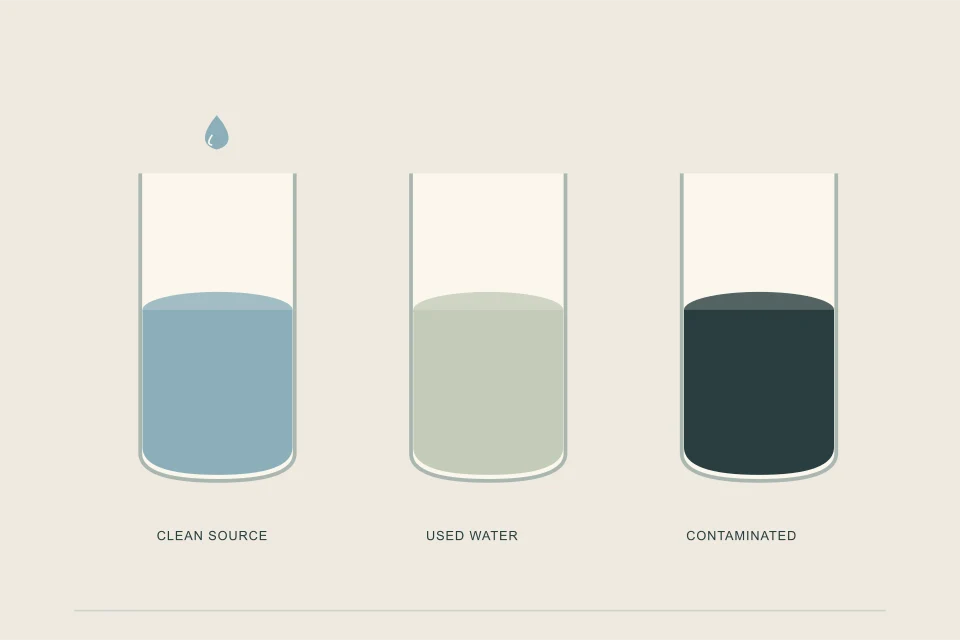
Clean, grey and black water: how the source of the water changes a burst pipe cleanup
Clean, grey or black water after a burst pipe? How the source and time change the cleanup, what gets thrown out, protective gear and when to call a pro.
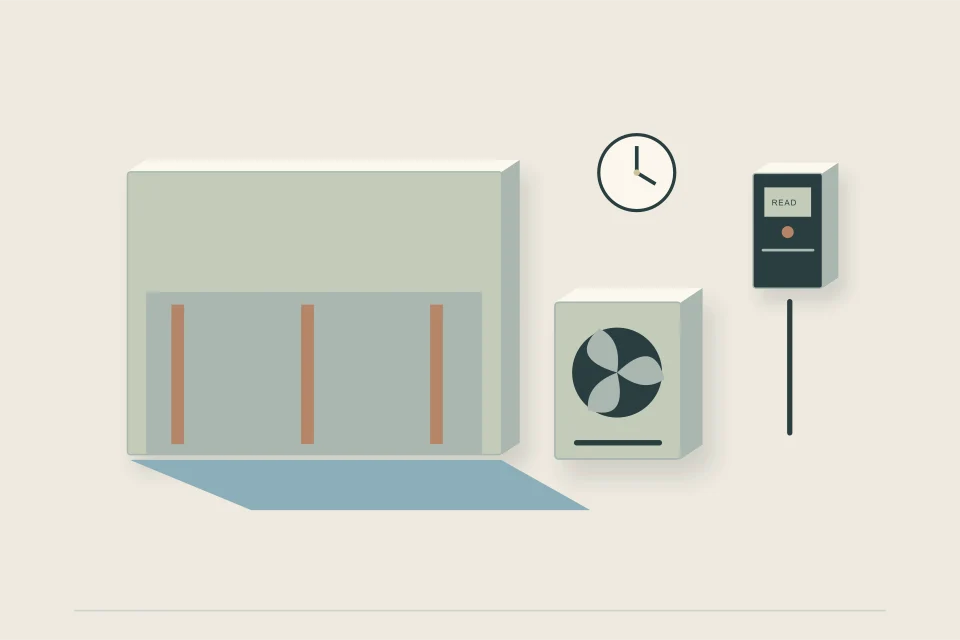
Drying out after a burst pipe: what to remove, what to dry, and how to reduce mould risk
Drying out after a burst pipe: why prompt drying helps reduce mould risk, what to remove, how dehumidifiers and air movers work, and when drying is really done.
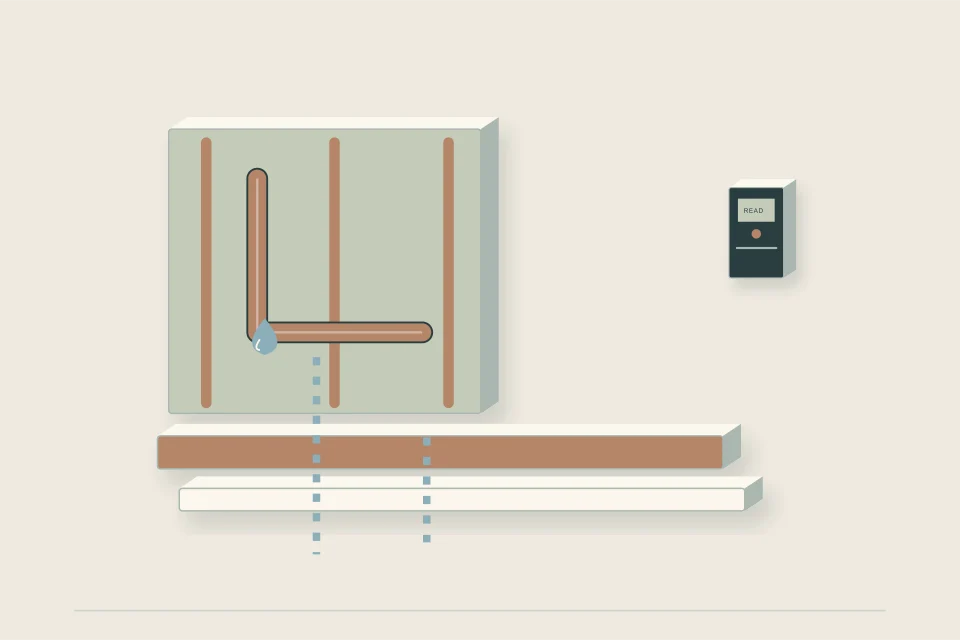
Burst pipe in a wall or ceiling: how to tell, how to find it and how it gets fixed
Burst pipe in a wall or ceiling: the sounds and stains that give it away, finding the break with the meter and a moisture meter, and opening and drying it.
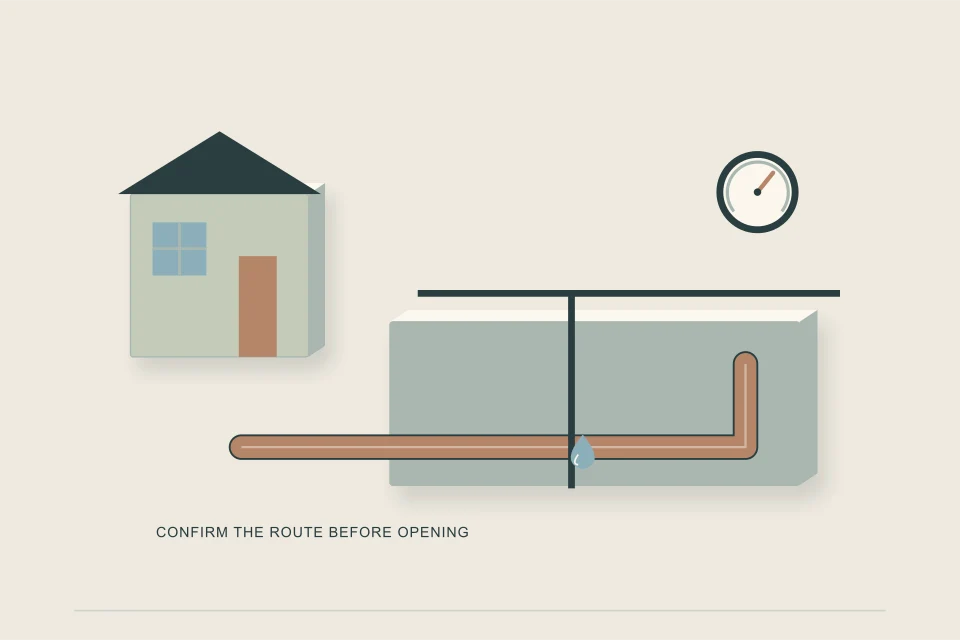
Burst pipe under a concrete slab or in the yard: who owns it, how it is found and how it is fixed
Burst pipe under a concrete floor or in the yard: signs, who owns the service line, leak detection, reroute versus breaking the slab, and digging safely.
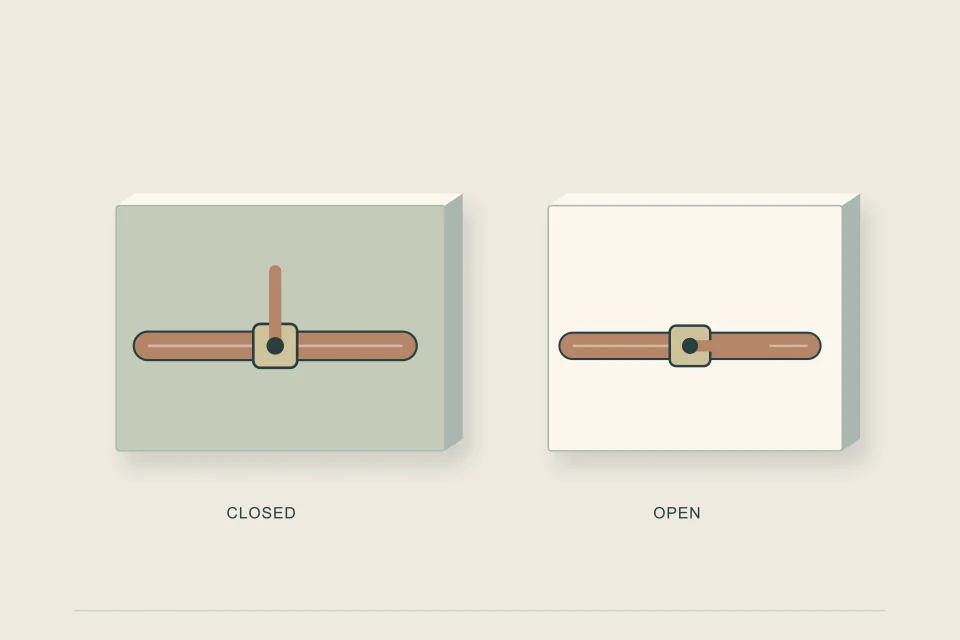
The main water shut-off valve: where to find it and how to close it in a burst
Where the main water shut-off usually is in Canadian houses, condos and townhouses, how to close gate and ball valves, and what to do if it will not turn.
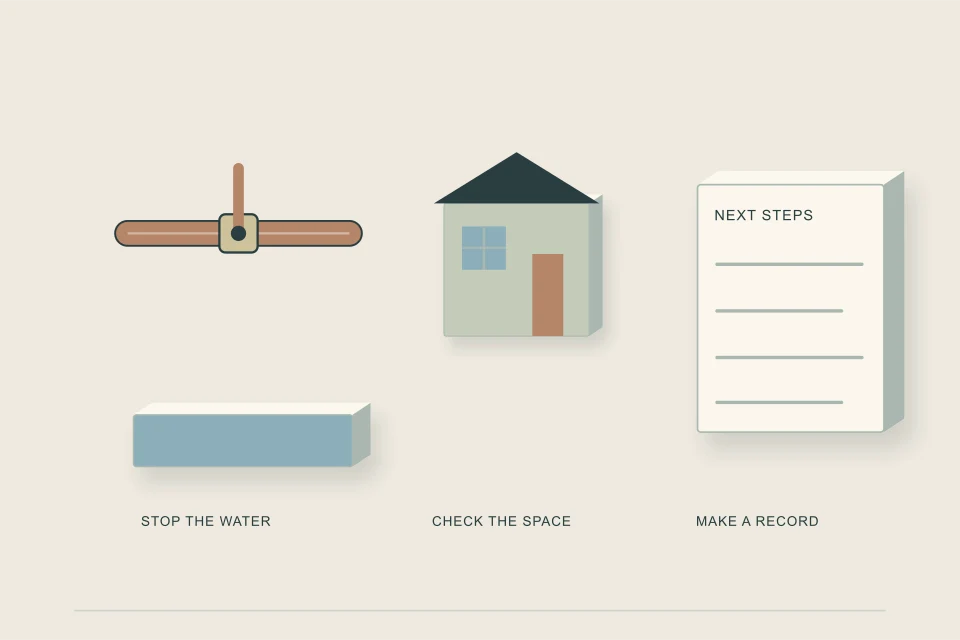
What to do when a pipe bursts: the first five minutes, first hour and first two days
What to do when a pipe bursts: the hazards to check first, how to stop the water, what to photograph, who to call and what to finish in the first 48 hours.
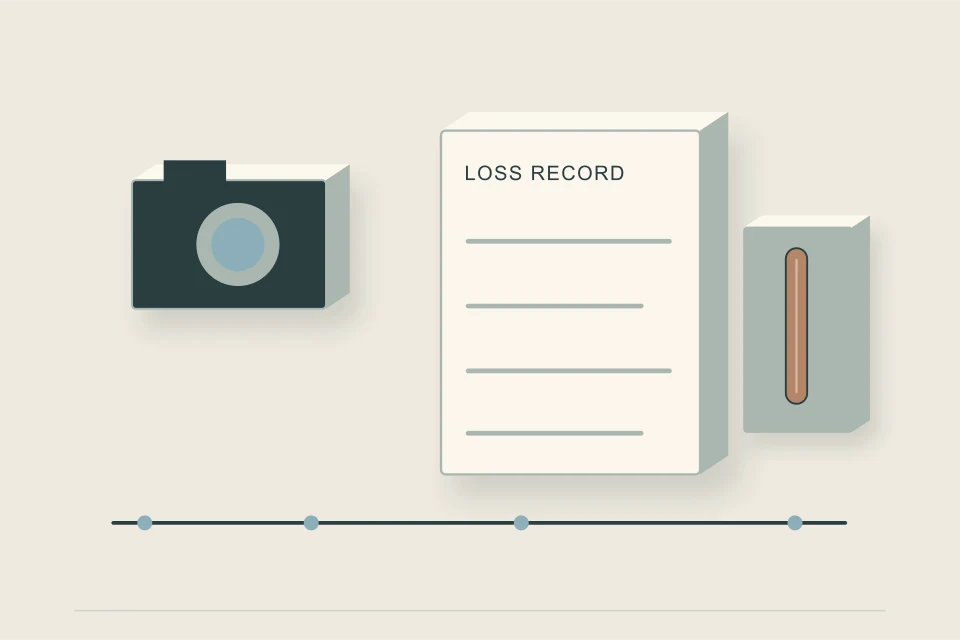
Documenting a burst pipe insurance claim so it holds up
How to document a burst pipe insurance claim: photos, the failed pipe, moisture logs, receipts, a contents list and the proof of loss deadline.
Burst pipes in rentals and condos: who pays, who repairs and whose insurance responds
Burst pipe in a rental or condo: what tenants, landlords, unit owners and condo corporations usually pay for, and whose insurance responds.
Does home insurance cover burst pipes? Sudden, gradual and freezing losses in Canada
Does home insurance cover a burst pipe in Canada? The sudden versus gradual test, freezing while away, heat and draining conditions, and deductibles.
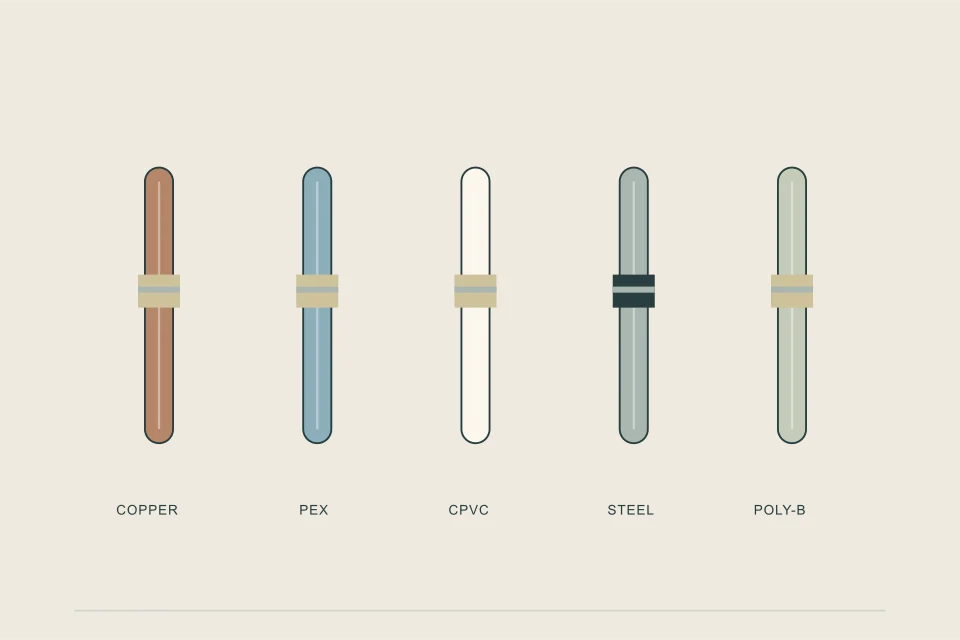
How a burst pipe is repaired, material by material
How burst pipes are repaired in copper, PEX, CPVC, PVC, galvanized steel and poly-B: identifying the pipe, the right joint, and when to repipe instead.
Plumber or water damage restoration company: who to call after a burst pipe
Plumber or water damage restoration company after a burst pipe? What each trade does, when you need both, and how to compare their estimates.
After the repair: finding the root cause and stopping a second burst
After a burst pipe, stop a repeat: find the root cause, check pressure and expansion, reroute or repipe, and add leak sensors or an automatic shut-off.
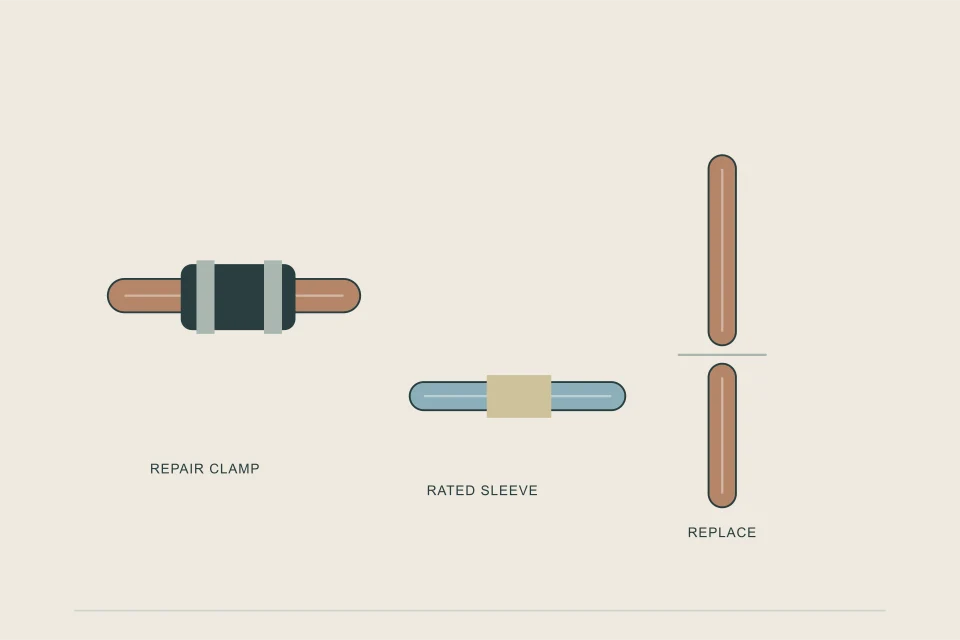
Temporary burst pipe fixes: the stop-gaps that hold, and the ones that fail
Temporary burst pipe fixes compared: repair clamps, push-fit couplings, silicone tape and epoxy putty, what each can hold and what fails.
Burst pipe safety: electricity, sagging ceilings and contaminated water
Burst pipe safety first: when water near outlets or the panel means calling the utility, what to do under a sagging ceiling, and when water is contaminated.
Burst pipe repair cost: plumbing, drying, rebuild and the bigger jobs
Burst pipe repair cost in Canada for 2026: planning ranges for the plumber, leak detection, drying, drywall and flooring, slab and yard leaks and repiping.
Burst Pipe Repair Matcher: the stop-gap, the proper repair and who should do it
Burst Pipe Repair Matcher: pick the pipe material, damage and location to see the stop-gap, the permanent repair, who should do it and what else to check.
Burst Pipe Water Loss Timer: how much water escapes before the valve is closed
Burst Pipe Water Loss Timer: estimate litres a minute from a pinhole, crack or split pipe at your pressure, the total before shut-off and the depth.
Burst pipe in Calgary: the shut-off, when to call 311, and what the City does and does not cover
Burst pipe in Calgary: close the main, when to call 311, the City's service valve and property-line split, permits for repairs, main breaks and cold snaps.
Frequently asked
What is the very first thing to do when a water pipe bursts?
Check that the water is not near electrical equipment or a sagging ceiling, then close the main water shut-off. If there is an electrical hazard, stay out and call your electric utility first.
Where is the main water shut-off in most Canadian houses?
Usually in the basement or utility room where the water service enters, often beside the water meter and near the floor. In condos and townhouses the unit valve may be under a sink, behind an access panel or in a mechanical closet.
How fast can a burst pipe flood a basement?
A fully split supply pipe can release water as fast as the house supply allows. At 45 litres a minute, 15 minutes adds up to about 675 litres, which is enough to soak a finished room.
Should I call a plumber or a restoration company after a burst pipe?
Usually both. The plumber stops and repairs the pipe; a water damage restoration company extracts water and dries the structure. For a small, exposed leak caught quickly, a plumber and your own clean-up may be enough.
Is a burst pipe covered by home insurance in Canada?
Sudden and accidental escapes of water from indoor plumbing are commonly covered on comprehensive policies, less the deductible. Freezing damage while a home was left unheated or unchecked, and gradual leaks, are common exclusions. Your policy wording decides.
How long do I have to dry things out after a burst pipe?
Aim for 48 hours. Health Canada says a house and its furnishings are less likely to grow mould if they are dried within 48 hours, so start removing water the same day.
Does BurstPipe.ca repair pipes?
No. BurstPipe.ca is an independent information and service-request site within HAUSE Home. It explains the options and can pass a request to local trades, but it is not a contractor.
Describe the problem once. Get a straight answer.
Tell us what you are seeing — when it happens, where, the age of the house and anything you have already been told or quoted. The HAUSE Home desk replies with next steps and, where available, a local contractor for the job.
Water pouring out right now? Shut off the main water valve, turn off power to wet areas only if the electrical panel is dry and safe to reach, and move people and valuables away from the water.