In a rental, the landlord usually repairs the pipe and the building, while the tenant's own insurance covers the tenant's belongings and extra living costs. In a condo, the corporation's policy usually covers the building and common property, and the unit owner's policy covers contents, improvements and liability, with bylaws deciding who pays the deductible. Provincial law and the documents decide the details.
- Tell the landlord or property manager immediately; in a building, shut-offs and repairs often sit with them.
- A landlord's policy does not usually cover a tenant's belongings; tenant insurance fills that gap.
- IBC says a condo corporation's policy does not cover a unit owner's contents, improvements or liability.
- Condo bylaws decide when an owner can be charged the corporation's deductible; read them before a loss.
- Rules are provincial: in Alberta, a tenant cannot withhold rent over repairs, and landlords may enter without notice in an emergency.
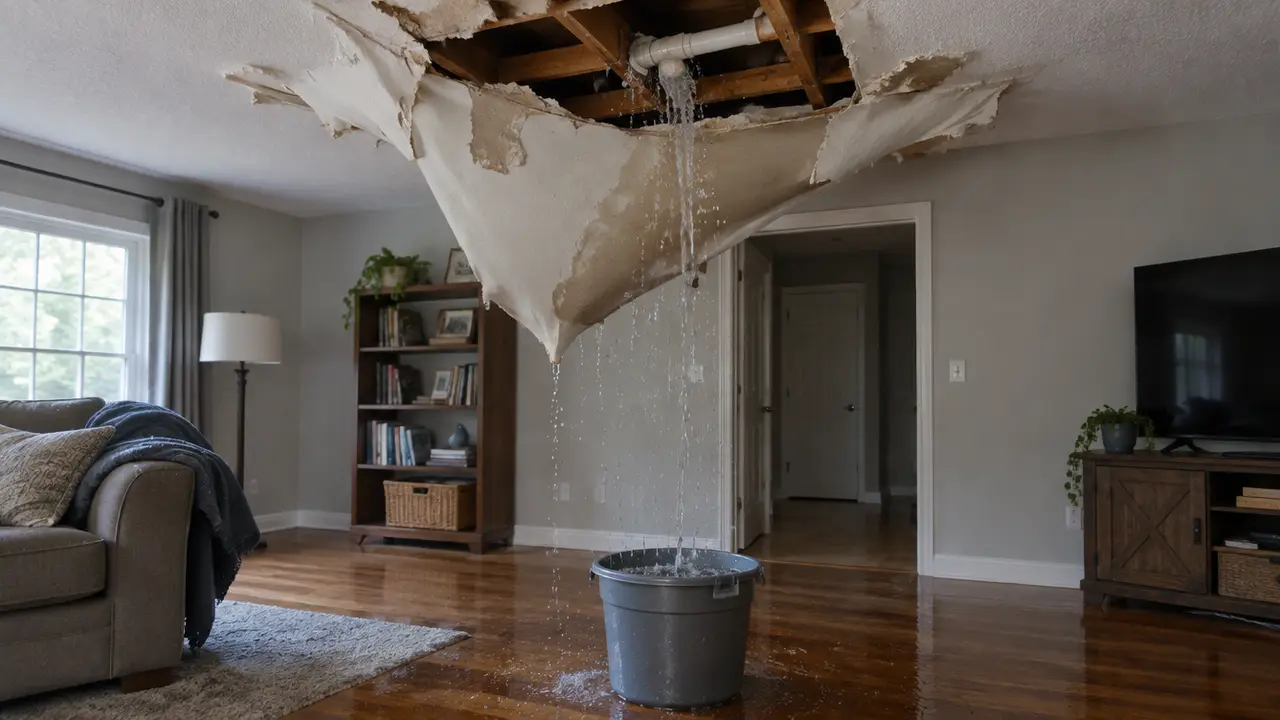
01 /What should a tenant do when a pipe bursts?
Stop the water if you can do it safely, then tell the landlord or property manager at once, in writing as well as by phone. Many rental units have a suite shut-off or at least fixture stops; in larger buildings, the valves that control a riser are in rooms only staff can reach. Warn neighbours below if water is going through the floor.
- Make it safe
Keep clear of water near outlets or the panel and from under a sagging ceiling; the electrical safety guide explains when to call the utility.
- Close the nearest valve
The suite shut-off if there is one, or the fixture stop under the sink, toilet or appliance.
- Notify the landlord
Phone the emergency number, then follow up by email or text with the time and what you saw.
- Photograph your belongings
Your own damaged items are your claim, not the landlord's.
- Call your tenant insurer
Report the loss, especially if you cannot stay in the unit.
02 /Who pays for a burst pipe in a rental?
Usually the landlord pays to repair the pipe and the building, and the tenant's insurance pays for the tenant's belongings. The picture changes if the tenant caused the damage, for example by damaging a pipe or ignoring conditions in the lease.
| Cost | Usually paid by | Notes |
|---|---|---|
| Repairing the pipe | Landlord | Part of keeping the premises in good repair |
| Drying and repairing walls, floors and ceilings | Landlord, often through their insurance | The building is the landlord's property |
| Tenant's furniture, clothes and electronics | Tenant, through tenant insurance | A landlord's policy does not usually cover these |
| Hotel and meals while the unit is unliveable | Tenant insurance, under additional living expenses | Rent arrangements depend on provincial law and the lease |
| Damage to other units caused by the tenant's negligence | Possibly the tenant, through liability coverage | Tenant liability coverage exists for this |
IBC describes tenant insurance as covering your belongings, personal liability, and additional living expenses when you cannot occupy your home after a covered loss. Without it, a tenant whose belongings are soaked by a landlord's burst pipe may have no simple route to recover them.
03 /What does Alberta's tenancy law say about repairs?
Alberta's government explains that a landlord is responsible for keeping rental premises reasonably safe and in good repair at all times, with standards drawn from the Public Health Act, the Housing Regulation and the Minimum Housing and Health Standards. For non-emergency repairs, a landlord must give at least 24 hours' written notice to enter, but may enter without notice or permission when there is reason to believe there is an emergency. A burst pipe is the obvious example.
Outside Alberta, the principles are similar in outline but the details, notice periods and dispute bodies differ by province. The provincial residential tenancy office or tribunal is the authoritative source for your situation.
04 /What should a landlord do after a burst in a rental?
Stop the water, protect the building, tell your insurer and keep the tenant informed. A landlord's policy covers the building and the landlord's liability, and a prompt response limits both the damage and the landlord's exposure to claims from tenants.
- Arrange the plumber and drying quickly; a unit left wet deteriorates and may become unfit to occupy.
- Document the condition of the unit and the cause of the break for your own claim.
- Confirm in writing whether the unit can be occupied and what happens to rent in the meantime, following provincial rules.
- If a tenant caused the damage, record the evidence; recovery usually runs through the tenant's liability coverage or the deposit rules in your province.
- In winter, check whether the lease places heating obligations on the tenant, and whether the policy has vacancy conditions for empty units.
05 /Who pays for a burst pipe in a condo?
It depends on where the pipe was, who caused it, and the corporation's bylaws and insurance deductible. The Insurance Bureau of Canada explains that condo insurance runs under two policies: the corporation's, which covers the buildings on the condominium plan, common property and built-in fixtures, and the unit owner's, which covers personal property, personal liability, and upgrades and improvements such as hardwood flooring and custom counters.
| Cost | Usually handled by | Watch for |
|---|---|---|
| Damage to the building structure and common property | Corporation's policy | The corporation's deductible |
| Standard unit finishes as originally built | Corporation's policy, in many buildings | How your bylaws define the standard unit |
| Owner upgrades: better flooring, cabinets, counters | Unit owner's policy | Improvement limits in the owner's policy |
| Owner's contents | Unit owner's policy | Contents limits and deductible |
| The corporation's deductible, when the owner's unit caused the loss | Possibly the owner, if bylaws allow a chargeback | Deductible coverage in the owner's policy |
| Owner's share of a large common loss | Loss assessment coverage | IBC says it pays your share up to a stated limit |
IBC is explicit that the corporation's policy does not cover a unit owner's personal contents, improvements to the unit or liability. Water that starts in one unit can travel through floors and service chases into several others, so a single burst can touch both policies and more than one owner.
06 /Can a condo corporation charge its deductible to an owner?
In many provinces, yes, where the bylaws allow it and the loss came from the owner's unit or conduct, within limits set by provincial law. Alberta's condominium information pages link to the province's fact sheet on recovering insurance deductibles and a bulletin clarifying deductible rules. The rules, caps and procedures differ by province and change over time, so read the current guidance for your province and your own bylaws.
- Ask your property manager for the corporation's current insurance certificate and its water damage deductible.
- Read the bylaw sections on insurance, deductibles, chargebacks and the standard unit.
- Check whether your own policy includes deductible or loss assessment coverage, and its limit.
- Keep records showing the cause of the burst, because exceptions such as construction defects can matter.
07 /What if the burst came from a neighbour's unit?
Report it to management and your insurer, photograph the damage in your unit, and do not rely on the neighbour's word about who pays. In a condo, the corporation's policy often responds to building damage regardless of which unit the water came from, while your own policy responds to your contents and improvements; insurers may then pursue whoever was responsible.
Neighbours in rentals and freehold semi-detached or row houses follow similar logic: your own insurer handles your loss first and may seek recovery from the party at fault. Keep communication factual and in writing. The claim documentation guide lists what to save, and the insurance coverage guide explains the underlying tests.
FAQQuestions people ask
Who is responsible for a burst pipe in an apartment?
Usually the landlord repairs the pipe and the building, and the tenant's own insurance covers the tenant's belongings. Provincial law and the lease decide the details.
Does a landlord's insurance cover a tenant's belongings after a burst pipe?
Generally no. A landlord's policy covers the building and the landlord's liability. Tenants need their own tenant insurance for their belongings and extra living costs.
Can my landlord enter my unit without notice for a burst pipe?
In Alberta, a landlord may enter without notice or permission when there is reason to believe there is an emergency. Other provinces have similar emergency rules; check yours.
Who pays the deductible when a pipe bursts in a condo unit?
It depends on the bylaws and provincial law. Many corporations can charge an owner the deductible when the loss came from the owner's unit, within provincial limits. Check your bylaws and your deductible coverage.
What if water from the unit above damaged my condo?
Report it to management and your insurer and document the damage. Building damage often goes through the corporation's policy, your contents and upgrades through yours, and insurers may recover from whoever was at fault.