The Burst Pipe Repair Matcher pairs a pipe material, the kind of damage and where the pipe is with a matching stop-gap, the permanent repair for that material, who should do the work, and notes on what else to check. It covers copper, PEX, CPVC, cold-water PVC, galvanized steel and poly-B, and only suggests an owner-fitted stop-gap for exposed copper, PEX or CPVC.
- Every result starts the same way: shut off, drain, then repair.
- The stop-gap and proper repair depend only on the material; the location decides who should do the work.
- Owner-fitted stop-gaps are suggested only for exposed copper, PEX or CPVC; every other combination is plumber work.
- A freeze split adds a note to look for more splits and fix why it froze; a wall or ceiling location adds opening, drying and a mould check.
- Galvanized steel and poly-B add a prompt to ask your insurer before the repair is scoped.
Burst Pipe Repair Matcher
01 /What does the Burst Pipe Repair Matcher do?
It gives you the vocabulary for the conversation with the plumber before the plumber arrives. Choose three things, press Show my result, and the matcher returns four pieces of information: a stop-gap to hold the line temporarily, the proper repair for that material, who should do it, and any extra checks your combination calls for.
| Input | Options | Default |
|---|---|---|
| Pipe material | Copper; PEX; CPVC; PVC (cold water); galvanized steel; poly-B (polybutylene) | Copper |
| What happened | Pinhole leak; split from freezing; leaking joint or fitting; crushed or kinked section | Split from freezing |
| Where it is | Exposed and easy to reach; inside a finished wall or ceiling; under a slab or in the ground | Exposed and easy to reach |
Not sure of the material? The identification table in repair by pipe material covers colours, markings and joint types.
02 /What stop-gap and repair does it give for each material?
The material alone sets the stop-gap and the proper repair. These are the exact patterns the tool returns.
| Material | Stop-gap (temporary) | Proper repair (permanent) |
|---|---|---|
| Copper | Repair clamp, or a push-fit coupling rated for copper | Cut out the damage and join a new copper section by soldering, pressing or push-fit couplings |
| PEX | A push-fit coupling rated for PEX | A new PEX section with crimp, clamp or expansion fittings of the system type already in the house |
| CPVC | A repair clamp, or a push-fit coupling rated for CPVC | A new CPVC section solvent-welded with CPVC cement and fittings |
| PVC (cold water) | A repair clamp | A new PVC section solvent-welded; PVC is for cold water only |
| Galvanized steel | A repair clamp | Replace the damaged run; galvanized pipe corrodes from the inside, so plan to repipe |
| Poly-B (polybutylene) | A fitting approved for poly-B | Repair with approved poly-B fittings, and get quotes to repipe; many insurers and buyers treat poly-B as a known risk |
03 /How does it decide who should do the work?
With one rule. If the pipe is exposed and easy to reach and the material is copper, PEX or CPVC, the matcher says a handy owner can fit an approved stop-gap on exposed pipe after shutting off and draining the water, and that the permanent repair is plumber work in most homes. For every other combination, it says the job is plumber work, because the location or material makes a lasting repair a job for a licensed plumber.
| Location | Copper, PEX or CPVC | PVC, galvanized or poly-B |
|---|---|---|
| Exposed and easy to reach | Owner may fit an approved stop-gap; permanent repair by a plumber in most homes | Plumber work |
| Inside a finished wall or ceiling | Plumber work | Plumber work |
| Under a slab or in the ground | Plumber work | Plumber work |
The owner stop-gap wording is deliberately limited to those three materials. Exposed PVC, galvanized steel and poly-B still get their stop-gap listed, but the matcher assigns the work to a plumber, and for galvanized and poly-B the repair usually opens a wider replacement question anyway. The stop-gaps themselves, and the ones that fail, are covered in temporary burst pipe fixes.
04 /What extra checks can appear?
Up to three notes, triggered by the damage, the location and the material. They are the questions a careful plumber asks after the first repair.
| Trigger | Note shown |
|---|---|
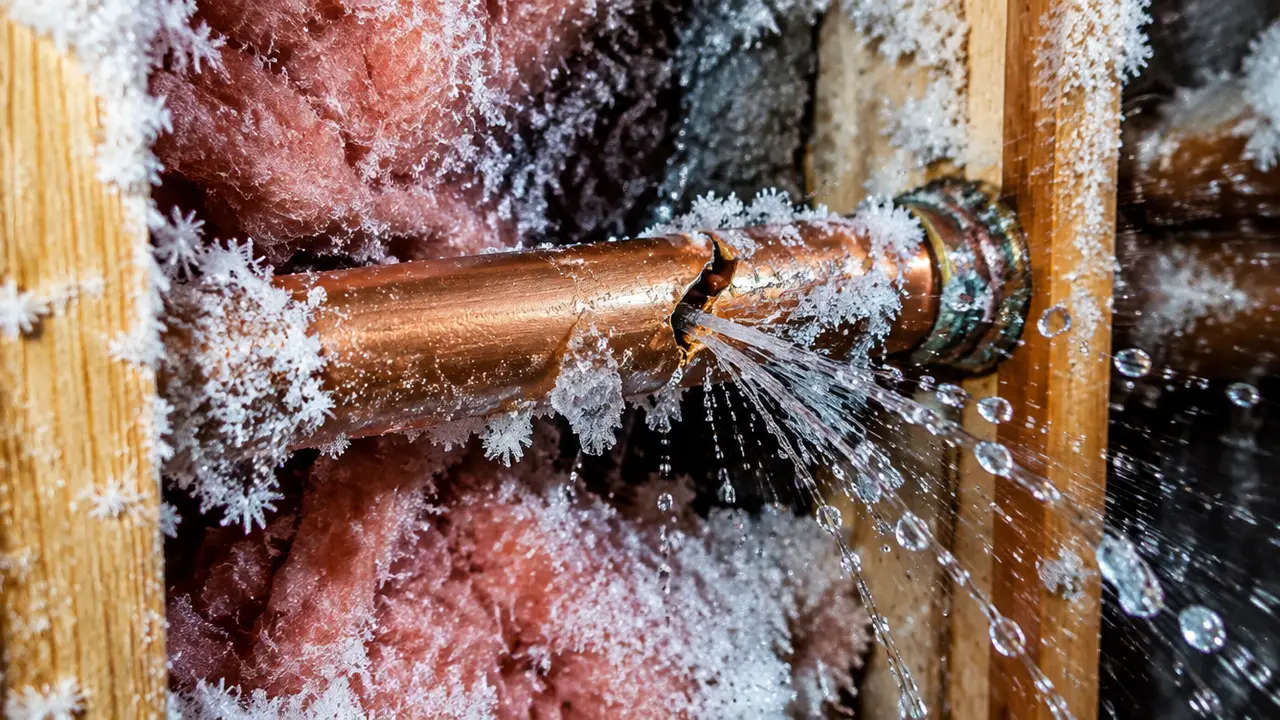
| Split from freezing | Look for more than one split, because freezing often cracks a pipe in several places, and fix why it froze before it freezes again |
| Pinhole leak | Pinholes in copper can point to wider pipe wear; ask the plumber to judge the rest of the line |
| Leaking joint or fitting | A failed joint may only need that fitting redone; the pipe itself can be sound |
| Inside a finished wall or ceiling | Open the wall or ceiling enough to dry it and check for mould; wet drywall and insulation are usually removed |
| Under a slab or in the ground | Leaks under a slab are found with leak detection; rerouting the line overhead is often compared with breaking the slab |
| Galvanized steel or poly-B | Ask your insurer how this pipe type affects your policy before the repair is scoped |
A crushed or kinked section adds no note of its own; the material and location notes still apply. The pinhole note is worded for copper, but the advice to have the rest of the line judged applies to any material.
05 /What do some typical results look like?
Here are four combinations and what the matcher returns for each.
| Material, damage, location | Who | Also check |
|---|---|---|
| Copper, split from freezing, exposed (the defaults) | Owner may fit an approved stop-gap; permanent repair by a plumber | Look for more splits and fix why it froze |
| PEX, leaking joint, inside a finished wall | Plumber work | The fitting alone may need redoing; open, dry and check for mould |
| Poly-B, pinhole, exposed | Plumber work | Have the rest of the line judged; ask your insurer about the pipe type |
| Galvanized steel, split from freezing, under a slab | Plumber work | More splits and the cause; leak detection and reroute versus slab; ask your insurer |
Every result is headed Shut off, drain, then repair, and ends with a reminder that fittings must be rated for the pipe, that some repairs need a permit, and to photograph the damage before anything is removed.
06 /What are the limits of the matcher?
It gives general repair patterns, not a diagnosis. It does not see your pipe, measure its condition, check local code, or know whether a joint was made properly in the first place. Some push-fit fittings are rated for concealed and permanent use and some jurisdictions or insurers restrict them; the plumber decides what is acceptable where you live. The National Plumbing Code of Canada covers the repair of existing plumbing as well as new work, and each province adopts and administers its own version, which is why the same repair can be treated differently in two provinces.
- Fittings must be rated for the exact pipe material and size.
- Some repairs, especially replacing water lines, need a permit. Calgary lists repairing a leak as permit-free but replacing water lines as permitted work; check your municipality.
- Photograph the damage and keep the failed section before anything is thrown away; the claim documentation guide explains why.
- Mixed systems are common in older houses; a single repair may involve two materials and a transition fitting.
07 /What should you do with the result?
- Take the result to the plumber and ask whether they agree with the method for your pipe.
- Ask what caused the failure, and ask for it in writing on the invoice.
- If the location is a wall or ceiling, arrange drying before the wall is closed; see the drying guide.
- If the material is galvanized or poly-B, ask your insurer about the pipe type and get a repipe price alongside the repair.
- Check the ranges in burst pipe repair cost before you approve an estimate.
If you have not yet stopped the water, go to the main shut-off guide first; the Burst Pipe Water Loss Timer shows what each minute costs.
FAQQuestions people ask
Can I fix a burst pipe myself?
On exposed copper, PEX or CPVC, a handy owner can fit an approved stop-gap after shutting off and draining the water. The permanent repair is plumber work in most homes, and anything in a wall, slab or on older pipe materials is plumber work.
What is the permanent fix for a burst PEX pipe?
A new PEX section joined with crimp, clamp or expansion fittings of the system type already in the house. A push-fit coupling rated for PEX is the usual stop-gap.
Why does the tool tell me to ask my insurer about poly-B?
Many insurers and buyers treat poly-B as a known risk, and some insurers ask about galvanized pipe too. Asking before the repair is scoped avoids surprises.
Does a freeze split need more than one repair?
Often. Freezing can crack a pipe in several places along a run, so the plumber should check the whole exposed length and deal with why it froze.
Why is PVC only for cold water?
PVC is not rated for hot water. Hot lines use materials such as copper, PEX or CPVC, and a PVC section should never be used as a repair on a hot line.