When a pipe bursts, first check for danger: water near outlets, a furnace or the electrical panel, a sagging ceiling, or sewage in the water. If none apply, close the main water shut-off, open the lowest tap to drain the lines, photograph the damage, move belongings, start removing water, and call a plumber and your insurer. Aim to have everything drying within hours.
- Danger comes before the valve: electricity near water, a bulging ceiling and sewage-contaminated water are stop-and-call situations.
- The main shut-off stops every litre at once; draining the lines afterward empties what is left in the pipes where you choose.
- Photograph before you clean, because your photos are the best record of a sudden loss you will ever have.
- Start water removal the same day; Health Canada ties a lower mould risk to drying within 48 hours.
- A burst pipe usually needs two trades: a plumber for the pipe and, if walls or floors are soaked, a drying company for the structure.
01 /When should you stop and call for help instead of acting?
Stop and call when water, electricity, weight overhead or contamination makes the room itself unsafe. A burst pipe feels like a plumbing problem, but the injuries it causes are electrical shocks, falling ceilings and infections, and each of those has a simple rule.
Ontario's Electrical Safety Authority puts the electrical rule plainly: do not go into a basement if the water is above outlets, baseboard heaters or the furnace, or is near the panel, and have the utility cut the power instead. The electrical safety guide explains when you can safely switch a breaker yourself and when you cannot.
02 /What do you do in the first five minutes?
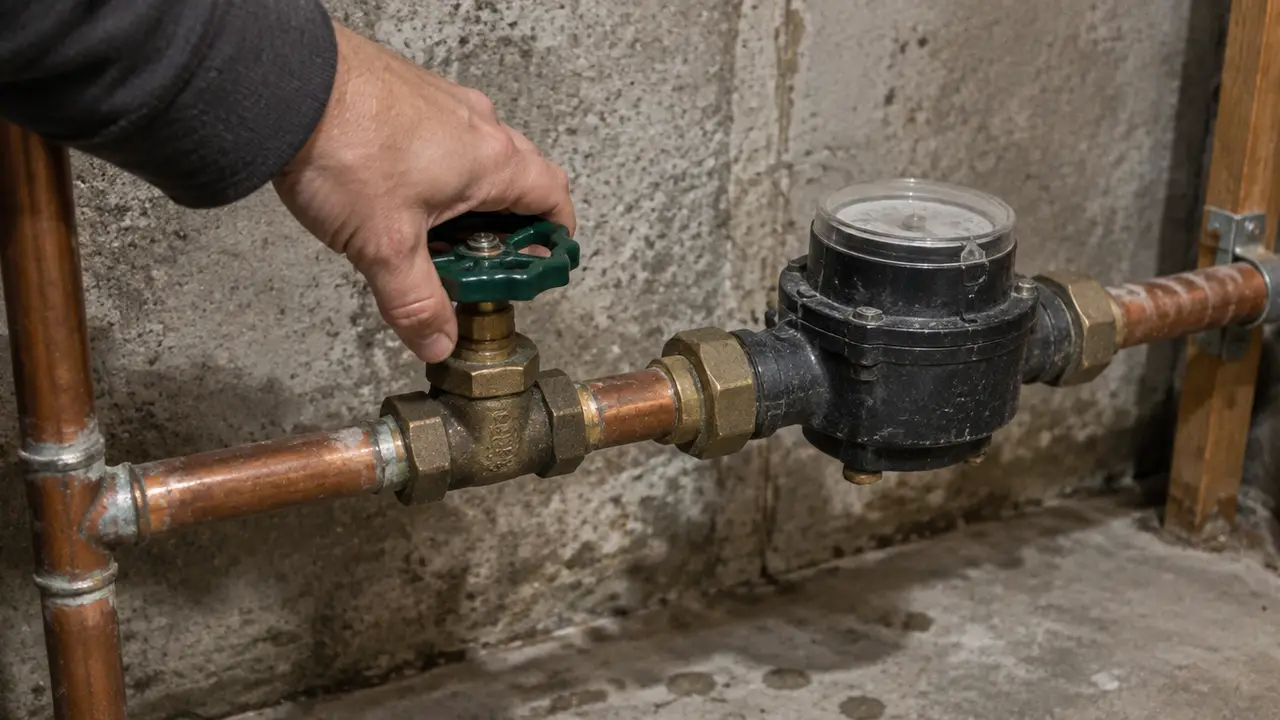
You close the main water shut-off. Everything else can wait a few minutes; water on the floor cannot. Most burst pipes are on the supply side, which stays under pressure until the valve is closed, so the flow will not slow down on its own.
- Take one look from a safe spot
Where is the water coming from, where is it going, and is anything electrical or overhead involved? If yes, go back to the stop-and-call list.
- Get to the main shut-off
In most houses it is where the water service enters the basement or utility room, often beside the meter and close to the floor. Take a flashlight; the power may be off.
- Close it fully
A round-handled gate or globe valve turns clockwise until it stops. A lever-handled ball valve turns a quarter turn until the handle sits across the pipe.
- Confirm the flow has stopped
Listen at the break and open a nearby tap. If water still runs hard, the valve may not be sealing, or the break may be on the street side of it.
- Tell everyone in the house
So no one flushes, showers or runs an appliance and wonders why nothing happens, or reopens the valve.
If the valve will not turn or will not seal, or you cannot find it, the main shut-off guide covers stuck valves and how the municipal side is shut off. In Calgary the City operates the outdoor service valve and asks residents to call 311; other municipalities have their own process.
03 /How much water escapes while you look for the valve?
A lot, if the pipe has split open. Once a break is large, the limit is usually how much water the house supply can deliver rather than the size of the hole. Using the orifice-flow method in the Burst Pipe Water Loss Timer, with its default supply limit of 45 L a minute and 60 psi of pressure, the figures look like this:
| Break | Flow | In 15 minutes | In one hour |
|---|---|---|---|
| 1 mm pinhole | About 0.8 L/min | About 13 L | About 50 L |
| Crack about 1 × 25 mm | About 27 L/min | About 401 L | About 1,605 L |
| Split ½-inch pipe, full bore | 45 L/min (supply-limited) | 675 L | 2,700 L |
Those numbers are why practising the route to the valve matters more than any gadget. Five minutes saved on a full split is about 225 litres that never reach the floor.
04 /What should you finish in the first hour?
Drain the lines, record the scene, protect what you can move and begin removing water. The order matters because photos taken after the clean-up tell an adjuster much less.
- Drain the pipes. Open the lowest cold tap in the house, such as a laundry tub or basement sink, and then an upper tap to let air in. The water trapped in the lines drains out where you choose.
- Deal with the water heater if needed. If the heater sits in the wet area, or you will be draining the hot side, turn a gas heater to its pilot or vacation setting and switch off an electric heater's breaker, but only if the panel is dry and you are standing on a dry floor.
- Photograph and film. Take wide shots of each room, then close-ups of the break, the water line on walls, damaged contents and the ceiling below. Include the time.
- Move and lift. Carry electronics, documents, rugs and furniture to a dry area. Put foil or plastic under furniture legs you cannot move so stains do not transfer into carpet.
- Remove water. Use a wet vacuum, mops and towels on hard floors, and a submersible pump if water is deep. Empty the water into a floor drain or outdoors away from the foundation.
- Call your insurer or broker. Report the loss, ask whether to book emergency drying yourself, and write down the claim number and the name of the person you spoke with.
Your policy expects you to limit further damage, and the Insurance Bureau of Canada says to keep receipts for clean-up and keep damaged items unless they are dangerous or a health hazard. The claim documentation guide lists what to save.
05 /Who do you call, and in what order?
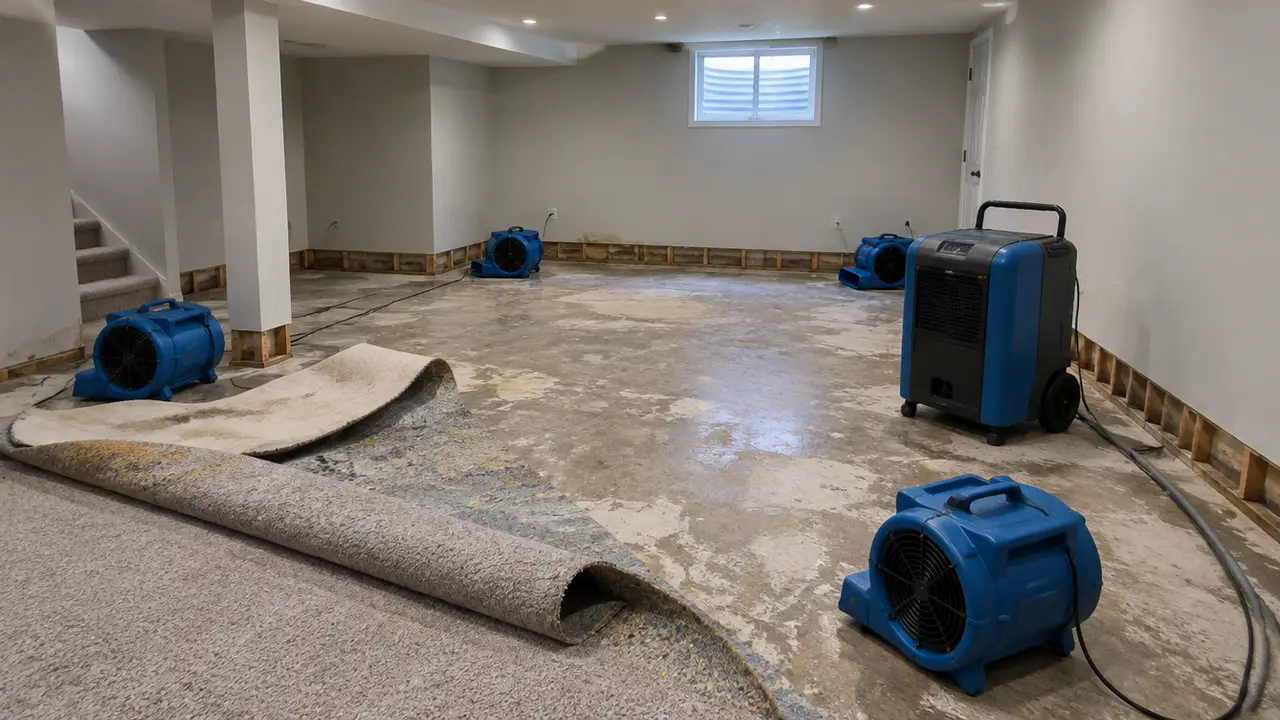
Call the plumber and the insurer in the first hour, and a drying company as soon as it is clear that walls, ceilings or floor coverings are wet. The order is practical: the plumber makes the pipe safe to repressurise, the insurer tells you how the claim will run, and the drying company stops the damage growing.
| Call | When | What they do |
|---|---|---|
| Electric utility | Before entering, if water is near electrical equipment | Disconnects power at the meter |
| Plumber | Within the first hour | Isolates, drains and repairs or caps the broken pipe |
| Insurer or broker | Same day | Opens the claim, assigns an adjuster, explains next steps |
| Water damage restoration company | Same day, if materials are soaked | Extracts water, removes wet materials, dries and monitors |
| Landlord, property manager or condo board | Immediately, if you rent or own a unit | Coordinates building shut-offs, repairs and insurance |
| Municipality (311 in Calgary) | If the break is outside or the valve cannot be closed | Checks and operates the municipal service valve |
When to use one trade or both is set out in plumber or water damage restoration company?, and renters and condo owners should read tenants, landlords and condos before paying for anything.
06 /How do you know a pipe has burst if you cannot see it?
Listen for running water with every tap closed, and check the water meter. A hidden burst shows itself through sound, pressure and stains before it shows itself as a puddle.
- A hiss or rush inside a wall or ceiling when nothing is running.
- The meter's dial or low-flow indicator moving with every fixture off.
- Pressure that suddenly drops at every tap.
- A spreading stain, bubbling paint or a ceiling that bows downward.
- Water appearing at a baseboard, a light fixture or a floor drain with no obvious source.
Pipes in exterior walls, over garages and in crawlspaces are the usual suspects after a cold night. Burst pipe in a wall or ceiling covers how to find and open the right spot, and burst pipe under a slab or in the yard covers breaks you cannot reach from inside.
07 /What should you avoid doing after a pipe bursts?
- Do not turn the water back on to test a taped or clamped pipe while you are away from the house or asleep.
- Do not use household vacuums, fans or heaters plugged into outlets in a wet room.
- Do not poke holes in a bulging ceiling from underneath while standing under it; a plumber or restorer drains it from the side with a bucket in place, or you leave it and keep people clear.
- Do not throw out damaged items before they are photographed and your insurer agrees.
- Do not thaw a frozen section with an open flame. Heat guns and torches start fires in wall cavities.
- Do not close the wall until the cavity has dried and been checked for mould.
08 /What happens over the next 48 hours?
The pipe gets repaired, the wet materials come out, and drying equipment runs until the structure reads dry. Health Canada says a house and its furnishings are less likely to grow mould if they are dried within 48 hours, and CMHC advises removing materials that cannot dry within that time.
| When | What should be happening |
|---|---|
| 0 to 5 minutes | Hazards checked, main shut-off closed |
| 5 to 60 minutes | Lines drained, photos taken, belongings moved, water removal started, plumber and insurer called |
| 1 to 12 hours | Pipe repaired or capped, standing water extracted, wet carpet pad and insulation removed |
| 12 to 48 hours | Drywall cut above the wet line, dehumidifiers and air movers running, moisture readings logged |
| Day 3 onward | Drying confirmed by readings, then rebuild; the cause of the burst addressed |
The drying guide explains each step. Once the house is dry, the last job is making sure it does not happen again: see preventing another burst pipe, and the sister site BurstPipes.ca for how pipes freeze and how to protect them through winter.
FAQQuestions people ask
Should I turn off the electricity when a pipe bursts?
Only if you can reach the panel while standing on a dry floor, and the panel itself is dry. If water is near outlets, heaters, the furnace or the panel, stay out and ask your electric utility to disconnect the power.
Can I turn my water back on after a pipe bursts?
Not until the broken section is repaired or capped. A temporary clamp or coupling may hold at low use, but watch it closely and shut the valve again when you leave or go to bed.
Do I call my insurance company or a plumber first?
Stop the water first, then call the plumber to make the pipe safe and the insurer the same day. Most insurers run a 24-hour claims line and can tell you whether to book drying yourself.
Is a burst pipe an emergency?
Yes, when water is running and you cannot stop it, when it is near electrical equipment, or when a ceiling is holding water. Once the main valve is closed and the area is safe, the repair itself can often wait until a plumber is available.
What should I do with the water heater after a pipe bursts?
If it sits in the wet area or you are draining the hot side, set a gas heater to pilot or vacation and switch off an electric heater at a dry panel. Leave it filled unless a plumber tells you otherwise.
How long does it take to fix a burst pipe?
An exposed break in accessible copper or PEX is often repaired within an hour or two of the plumber arriving. Breaks inside finished walls, under slabs or in the yard take longer because of access, and drying the house usually takes several days.